
Introduction
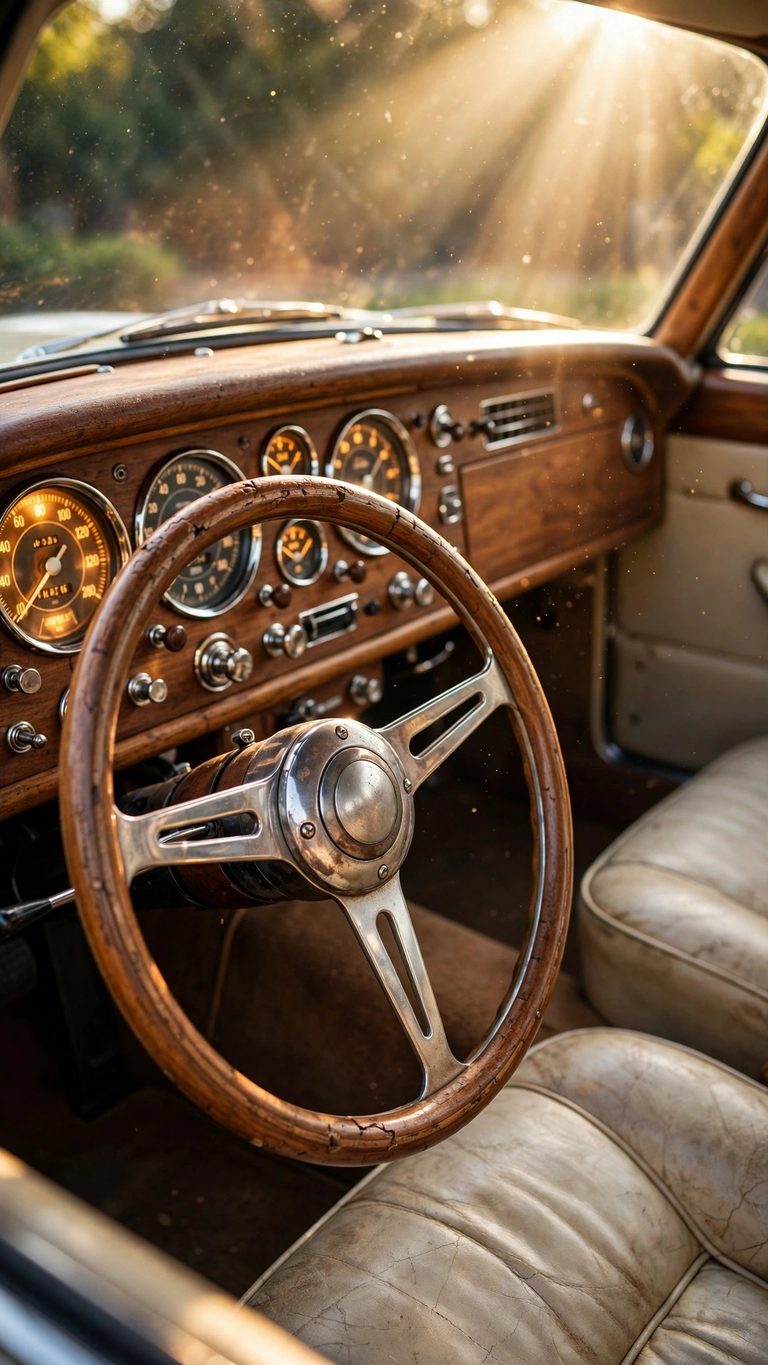
Slide into the driver’s seat of a classic car and look around. Walnut wood dashboard, polished by decades of hands. Cream leather seats with a rich patina that no factory can fake. Chrome dials glowing softly in the afternoon light. Dust motes drifting through a sunbeam slanting across the windshield. A classic car interior is a time capsule, and photographing it well is an art: cramped space, tricky light, and a hundred details competing for attention. This AI photo prompt captures all of it in one frame. Interior shots are having a moment in the #ClassicCar world because they feel intimate and aspirational, like an invitation into a more elegant era of driving. Whether you create content for vintage car pages, design retro posters, or just dream of owning one, this prompt generates a cockpit portrait with warm light, honest materials, and luxurious vintage atmosphere, no classic car required.
The Prompt
Copy the prompt below exactly as written to get the intended warm, detailed interior look.
Interior photograph of a classic car cockpit, walnut wood dashboard, cream leather seats with patina, chrome dials glowing softly, steering wheel in sharp focus, warm afternoon light streaming through windshield, dust motes floating, luxurious vintage atmosphere, ultra detailed, 8k, photorealistic
Why This Prompt Works
Car interiors are hard to photograph because they are small, dark, and full of competing textures, yet this prompt turns every challenge into a strength. The material list does the heavy lifting: walnut wood dashboard, cream leather seats with patina, chrome dials. Three materials, three stories. Walnut signals craftsmanship and heritage, cream leather with patina signals age and authenticity, since patina is the one thing money cannot buy new, and chrome dials signal mechanical precision. Together they create a sensory richness that viewers can almost feel, and tactile imagery drives engagement because the brain simulates touch. The lighting phrase is equally deliberate: warm afternoon light streaming through windshield. Afternoon light is golden and directional, and streaming through the windshield gives it a natural source and direction, which makes the render believable. Backlit dust motes floating in that beam are the detail that sells the whole image. Dust motes are a classic cinematic cue, tiny and almost subliminal, but they instantly communicate atmosphere, stillness, and a sunlit interior. Steering wheel in sharp focus gives the composition an anchor point, a hero object for the eye to land on, while the rest can fall into softer focus like a real interior shot. The phrase luxurious vintage atmosphere sets the emotional register: not a junkyard find, but a cherished machine. In terms of trends, interior and detail content is outperforming exterior glamour shots in the #Luxury lifestyle space right now, because it feels personal and exclusive, like a peek behind a velvet rope. An image that makes someone imagine sitting in that seat will always beat one they merely admire from outside.
How to Use This Prompt
Getting a clean interior render takes a little care. Step one: copy the full prompt from the box above. Step two: paste it into your generator. This post was built for 9:16 portrait, so in Midjourney v7 add –ar 9:16, which frames the dashboard vertically with the windshield glow above. For Flux or Stable Diffusion, use a portrait canvas such as 768 by 1344 with 30 to 40 steps and a photorealistic checkpoint, since the original settings specify Flux or Stable Diffusion for this one. DALL-E 3 users can paste the prompt in ChatGPT and request a vertical image. Step three: generate four or more variants and inspect the details closely. AI interiors sometimes produce warped dials, impossible gauge layouts, or extra steering wheels, so zoom in on the dashboard and discard anything with mangled instruments. Step four: upscale your cleanest result, which will sharpen the wood grain and leather texture beautifully. Tip: if the image feels too dark, regenerate with bright warm interior added, or raise exposure slightly in any free photo editor. Save the seed of your winner for matching exterior shots later.
Pro Tips & Creative Variations
Interiors are endlessly customizable. Change the era and marque feel: a 1950s American cruiser with a turquoise metal dash and white steering wheel, a 1960s British roadster with black leather and toggle switches, or a 1970s Italian sports car with a stark black dash and Veglia gauges. Swap materials for mood: dark oxblood leather with piano-black trim reads masculine and moody, while tan leather with light wood reads airy and Californian. Play with light: try dusk with the dashboard lamps glowing and city lights bokeh through the windshield for a night-drive mood, or early morning mist with soft cool light for quiet contemplation. Add human presence without a full person: a driver’s gloved hand resting on the wheel, or a pair of vintage driving gloves and sunglasses on the passenger seat, tells a story in a single detail. Detail crops work wonderfully too: an extreme close-up of the chrome dials with the needle at redline, or the gear lever with a wooden knob, each makes a striking standalone post. For a series, generate the same cockpit at three times of day, morning, afternoon, and night, and present it as a triptych. If you publish in the #Interior or classic car niche, that kind of cohesive series builds a recognizable style fast. And remember the dust motes: small atmospheric phrases like faint leather scent of age are nonsense to a model, but light haze and floating dust consistently add cinematic depth, so keep an atmosphere phrase in every variation.
Frequently Asked Questions
Why do the gauges and dials sometimes look wrong? Small text and precise instruments are notoriously hard for AI. Dials may show gibberish numbers or impossible layouts. Generate several variants, zoom into the dashboard, and keep the cleanest one. Slightly softening the dial area or cropping tighter on the wheel can also hide flaws.
Can I show a specific classic car interior? Describe the style rather than the model, such as 1960s British sports car cockpit with wooden dash, for the most accurate and legally safe results. Real model names can produce distorted badges and may raise trademark concerns for commercial use.
The image came out too dark. What should I do? Interiors are naturally dark scenes. Add bright warm cabin light to the prompt, or lift shadows in a free editor afterward. Generating with a slightly simpler prompt can also help the model allocate more light to the cabin.
Is portrait or landscape better for interiors? The original post uses 9:16 portrait for mobile feeds, which works well for a driver-perspective shot. Landscape suits dashboard-wide panoramas and desktop wallpapers. Match the ratio to your publishing platform.
A classic cockpit is more than a car interior, it is a memory of how driving used to feel. This AI photo prompt recreates that feeling with walnut, leather, chrome, and golden light. Copy the prompt, generate your 9:16 portrait, and step inside. Then make it yours with new eras, new materials, and new light. Your audience can almost smell the leather already.
Related Viral Prompts
- Supercar Rain Night AI Photo Prompt: Generate Moody Neon Reflection Street Photography With Cinematic Noir Vibes
- Vintage Motorcycle Headlight Macro AI Photo Prompt: Glowing Amber Lens Detail in Night Bokeh for Stunning Close-Up Shots
- Retro Pickup Truck Neon Gas Station AI Photo Prompt: Pink and Teal Midnight Vaporwave Aesthetic for Viral Retro Art
# A I P h o t o # P r o m p t B a z a r # C l a s s i c C a r # I n t e r i o r # L u x u r y

Leave a Reply