
Introduction
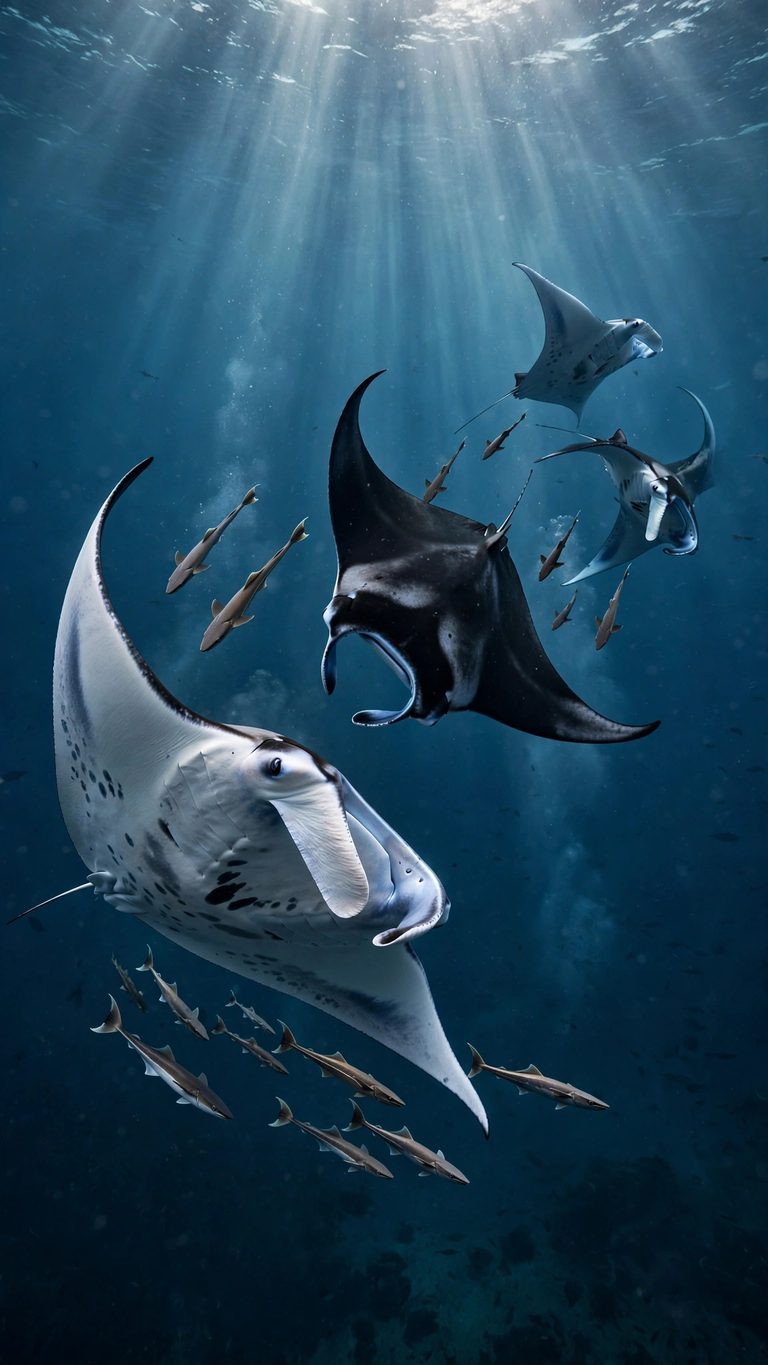
Forget everything you think a dance floor looks like. The most graceful ballet on Earth happens sixty feet underwater, performed by creatures with wings spanning several meters and not a single rehearsal. Giant manta rays barrel-roll through clouds of drifting plankton, black-and-white wings catching shafts of sunlight like spotlights, while tiny remora fish trail behind like an entourage. This prompt captures that underwater ballet in a slow cinematic orbit that circles the performance, giving viewers the sense of floating in the blue right beside these gentle giants. Manta footage is rare in the wild, which makes it magnetic on screen; people simply cannot look away from animals that move like birds but live in the sea. Clips in the #MantaRay niche punch far above their weight in shares because they deliver genuine awe, and this #AIVideo prompt hands you that awe on demand. Ten seconds of otherworldly elegance is all it takes to make someone a follower for life.
The Prompt
Copy the prompt exactly as it appears below. The orbit and barrel-roll language is what creates the signature ballet motion.
Majestic underwater ballet of giant manta rays somersaulting gracefully in blue water, black and white wings spanning several meters, barrel-rolling slowly through drifting plankton clouds, sun rays spotlighting from above, remoras trailing behind, otherworldly elegance, slow cinematic orbit, ultra realistic, awe-inspiring
Why This Prompt Works
This prompt is choreography disguised as a description. The phrase “underwater ballet” does enormous work: it tells the model to render motion that is rhythmic, graceful, and coordinated rather than random swimming. Then “somersaulting gracefully” and “barrel-rolling slowly” specify the actual moves, giving the model two distinct rotational motions that read as dance when combined. Without those verbs, a manta prompt typically produces straight-line swimming; with them, you get performance.
The visual details are engineered for spectacle. “Black and white wings spanning several meters” locks the species identity and the dramatic contrast pattern that makes mantas so photogenic, while the scale reference helps the model keep proportions believable. “Drifting plankton clouds” add volumetric atmosphere that catches the light and gives the water visible texture, which is the difference between empty blue and a living ocean. “Sun rays spotlighting from above” is the lighting masterstroke: it turns the water column into a stage and naturally vignettes the scene around the rays. “Remoras trailing behind” contribute authentic detail and secondary motion that enriches every frame.
“Slow cinematic orbit” is the camera instruction that elevates the whole clip. An orbiting camera creates continuous parallax, revealing the rays from new angles throughout the ten seconds, which keeps viewers watching to see the next reveal. The closing “ultra realistic, awe-inspiring” tags push fidelity and emotional impact together. In 9:16 vertical, the tall frame suits the vertical light shafts and the rays’ wide wingspans in a way that feels custom-built for mobile viewing.
How to Use This Prompt
Copy the prompt verbatim into your generator. On Google Veo 3, select text-to-video, 9:16, ten seconds, and trust its physics model with the barrel rolls; Veo handles large-scale rotational motion better than most. In Runway Gen-4, set the camera to orbit or circular motion at a slow speed to match the “slow cinematic orbit” instruction. Kling users should enable camera control with an orbital path and keep motion strength at medium so the somersaults read clearly without smearing. On Pika, this prompt benefits from the highest quality setting and a moderate motion value, since the wings need crisp edges during rolls. In Sora, storyboard this as the climactic shot of an ocean sequence, preceded by an approach shot through the plankton cloud. After rendering, check the wing edges during the fastest part of each roll for tearing or doubling, and regenerate with a new seed if you spot it. A deep blue grade with lifted highlights on the rays will make the ballet pop.
Pro Tips & Creative Variations
The ballet concept scales beautifully. Try a “feeding frenzy ballet” variation by adding “a dozen mantas chain-feeding in a spiral” for a spectacle that looks like a choreographed finale and stops scrollers cold. A silhouette version, with the rays backlit against the bright surface, turns the same motion into high-contrast art that performs exceptionally well as a thumbnail or channel banner. For a day-night pair, render the ballet under moonlit blue water with bioluminescent plankton trails, and post the two versions side by side to double your content from one idea.
Sound design can make or break this clip: pair the slow orbit with a swelling orchestral score or a deep ambient drone, since grandeur needs audio to match. If you are building a series, keep the plankton density and light angle consistent across episodes so viewers recognize your “manta theater” instantly. One common mistake is letting the camera orbit too fast, which turns elegance into dizziness; when in doubt, slow it down and let the rays’ own motion carry the energy. You can also extend the piece by generating a second orbit from the opposite direction and crossfading between them for a twenty-second extended cut. Finally, add a simple fact caption about manta wingspans or intelligence, because awe plus learning is the combination that earns saves.
Frequently Asked Questions
Why do my manta wings tear or double during the rolls?
Wing tearing happens when rotational motion outpaces the model’s frame coherence. Lower the motion strength one notch, keep the clip at ten seconds, and regenerate with a fresh seed; most seeds resolve it. If the issue persists on one tool, try the same prompt on Veo 3 or Kling, which handle large rotational motion more robustly.
Can I fit more than two mantas in the scene?
Yes, but composition gets harder. Add “a squadron of mantas” to the prompt and watch for overlapping wing geometry, which is the main failure mode with groups. Two to three mantas is the sweet spot for clarity; larger groups work better as distant background silhouettes behind one hero ray in the foreground.
How do I keep the plankton from looking like dirt or noise?
Plankton should read as soft glowing particles, not grain. Make sure “drifting plankton clouds” stays in the prompt, keep the light shafts strong so particles catch the light, and avoid heavy sharpening in post, which turns soft particles into harsh specks. A slight bloom or glow effect in your editor sells the underwater atmosphere.
What is the best posting time for manta content?
Awe-driven nature content performs best in evening hours when viewers are relaxing and browsing emotionally, typically between 7 and 10 PM in your audience’s timezone. Weekend mornings also work well. Test both windows with identical clips and let your analytics decide your permanent slot.
Give your audience a front-row seat to the ocean’s grandest underwater performance. Generate this manta ray ballet today, let the slow cinematic orbit work its magic, and pair it with music worthy of the moment. Awe is the rarest currency on social media, so spend it wisely, keep delivering wonder with every post, and return for more prompts that turn fascination into a thriving community.
Related Viral Prompts
- Underwater Ruins Temple AI Video Prompt: Exploring an Ancient Sunken Sanctuary in Haunting Blue Light
- Fish Tornado AI Video Prompt: Copy This Viral Bait Ball Swarm Prompt for Veo 3, Runway, Kling, Pika and Sora
- Whale Diver Encounter AI Video Prompt: Copy This Emotional Humpback Whale Video Prompt for Veo 3 and Runway
# A I V i d e o # P r o m p t B a z a r # M a n t a R a y # B a l l e t # M a j e s t i c

Leave a Reply