
Introduction
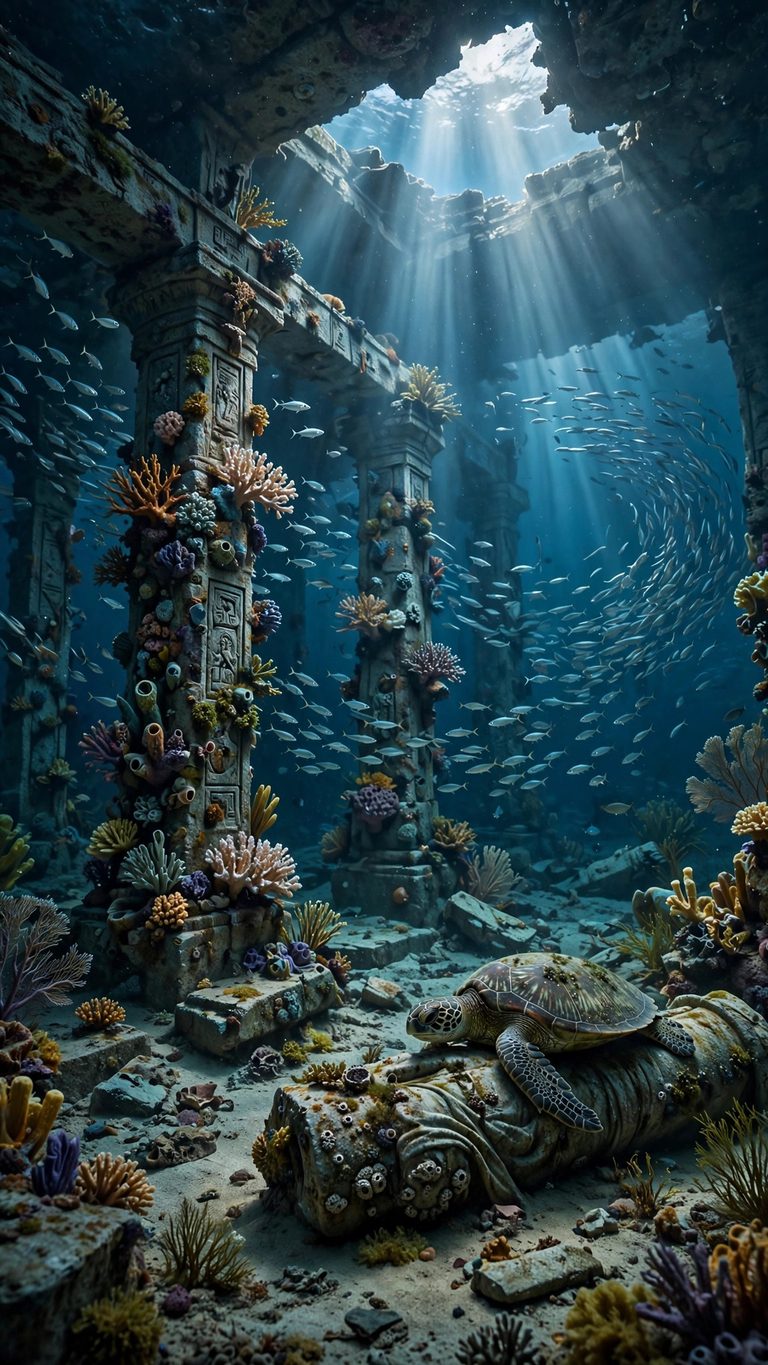
Every child who ever read about Atlantis has dreamed this scene: stone pillars rising out of blue gloom, carved faces staring through centuries of coral, and schools of silver fish swirling where worshippers once walked. This prompt turns that dream into a ten-second vertical expedition across an ancient temple on the ocean floor, where nature has spent a thousand years reclaiming what humans built. A turtle rests on a fallen statue like a guardian that never left its post, shafts of blue light pierce the broken roof, and the whole scene glows with haunting beauty. Mystery is the most bingeable emotion in short video, and lost-civilization content sits at its center; viewers cannot resist a ruin because every ruin is a question. The #UnderwaterRuins niche blends history, fantasy, and nature into one irresistible package, and this #AIVideo exploration prompt delivers it without a submarine or a film crew. Step through the broken gates, and let your audience wonder what else lies buried in the blue.
The Prompt
Here is the full prompt, ready to copy. Keep the “haunting beauty” anchor at the end; it is doing more work than it looks.
Mysterious exploration of ancient stone temple ruins resting on the ocean floor, coral and sponges reclaiming carved pillars, shafts of blue light through broken roof, schools of silver fish swirling, a turtle resting on fallen statue, lost civilization wonder, slow cinematic glide, ultra realistic, haunting beauty
Why This Prompt Works
This prompt succeeds because it fuses two proven genres, the ruin exploration film and the nature documentary, into a single shot. “Mysterious exploration of ancient stone temple ruins” sets the camera as an explorer and the subject as archaeology, which immediately gives the clip narrative momentum: the viewer is discovering something, not just looking at something. Discovery is a far stronger retention hook than scenery, because the brain wants to see what comes next around every pillar.
The reclamation details are what make the scene feel real. “Coral and sponges reclaiming carved pillars” tells the model to fuse architecture with biology, and that fusion is the visual signature of every convincing sunken ruin. “Shafts of blue light through broken roof” provides dramatic interior lighting that models render beautifully, since light through broken geometry is a pattern they have learned from countless films. The “schools of silver fish swirling” add living motion that contrasts with the stillness of stone, a contrast that keeps the eye moving and the scene alive. And “a turtle resting on fallen statue” is the emotional anchor: a single living guardian that gives the ruin a soul and gives viewers a character to care about.
“Lost civilization wonder” names the feeling directly, which steers color and composition toward awe rather than horror, while “slow cinematic glide” keeps the camera reverent and steady. The closing “ultra realistic, haunting beauty” is a perfect tonal pairing: realism grounds the fantasy, and haunting beauty gives it poetry. At ten seconds in 9:16 with a slow glide, the format suits exploration content that viewers watch to the end to see the full reveal.
How to Use This Prompt
Copy the prompt exactly and paste it into your video tool. In Google Veo 3, use text-to-video at 9:16 and ten seconds; Veo’s handling of volumetric light through broken architecture is superb, so the roof shafts will look genuinely cinematic. Runway Gen-4 users should set a slow forward glide on the camera to mimic a diver swimming through the temple, keeping the speed low so carved details stay readable. On Kling, enable camera control with a gentle dolly and medium motion strength, which keeps the fish schools swirling without blurring the stonework. Pika renders this scene well with its cinematic style; generate at high quality and watch the statue faces for morphing. In Sora, this makes a stunning establishing shot: follow it with a close-up of the turtle on the statue for a two-shot mini story. After rendering, inspect the carved pillars for melting geometry, the classic artifact in AI architecture, and regenerate with a new seed if the stonework warps. A cool blue grade with warm accents on the coral will complete the haunting look.
Pro Tips & Creative Variations
Ruins are a content universe, not a single clip. Keep the temple structure and lighting identical but change the era: a sunken Greek colonnade, a drowned Mayan pyramid, or a flooded futuristic city, and you have an instant “lost worlds” series with a recognizable visual brand. A treasure variation adds “a half-buried golden artifact glinting in the light shaft” for a hook that spikes the first three seconds of retention. For a day-night pair, render the temple under eerie moonlit blue with glowing plankton, then post the sunlit and moonlit versions as a haunting diptych.
Narration multiplies the mystery: record a low, slow voiceover with lines like “No map marks this place” over the glide, since audio storytelling transforms a pretty clip into an expedition. If you want a longer video, generate three glides through different temple chambers with matching light direction and edit them into a thirty-second exploration with chapter captions. One pitfall is letting the model add modern elements like ladders or ropes, so include “no modern objects” in a regeneration if anachronisms appear. Study real reference photos of submerged ruins to calibrate your eye; the closer your mental model, the faster you will spot good seeds. Finally, end the clip with an on-screen question such as “What civilization built this?” because mystery plus a question is the formula that fills comment sections.
Frequently Asked Questions
How do I stop the stonework from warping or melting?
Architecture warping is the top artifact in ruin prompts. Regenerate with a new seed first, since clean seeds are common. If warping persists, lower motion strength slightly and add “stable geometry, crisp stone carving” to reinforce structure. Checking the render frame by frame at the glide’s midpoint, where motion peaks, catches issues early.
Can I make the temple look like a specific civilization?
Yes. Add era-specific nouns to the prompt, such as “Greek columns,” “Mayan stepped pyramid,” or “Egyptian obelisks,” while keeping the reclamation and lighting language intact. The model’s architectural knowledge is strong, and the coral-and-sponge overlay will adapt to any style. Test one variation at a time to keep the series visually coherent.
Should I add text overlays or keep it clean?
For mystery content, minimal text wins. Let the first viewing be pure discovery, then add a single provocative caption or question at the end. Heavy overlays break the immersion that makes ruin clips special. If you need facts, put them in the video description or a follow-up comment instead.
What length works best for exploration clips?
Ten seconds is ideal for a single-chamber reveal, matching this prompt’s settings. For multi-chamber explorations, stitch three ten-second glides into a thirty-second video with brief pauses between chambers. Anything longer risks losing the mystery tension that drives completion rates.
Some doors have been waiting a thousand years to be opened on camera, and your viewers are ready to step through. Generate this sunken temple exploration today, add a whisper of narration, and end with a question that fills the comments. Mystery keeps audiences returning for answers, so build your lost-world series one chamber at a time and come back for more prompts that turn curiosity into loyal followers.
Related Viral Prompts
- Fish Tornado AI Video Prompt: Copy This Viral Bait Ball Swarm Prompt for Veo 3, Runway, Kling, Pika and Sora
- Whale Diver Encounter AI Video Prompt: Copy This Emotional Humpback Whale Video Prompt for Veo 3 and Runway
- Seahorse Macro Drift AI Video Prompt: Copy This Magical Tiny Seahorse Video Prompt for Veo 3, Kling and Pika
# A I V i d e o # P r o m p t B a z a r # U n d e r w a t e r R u i n s # M y s t e r y # E x p l o r e


Leave a Reply