
Introduction
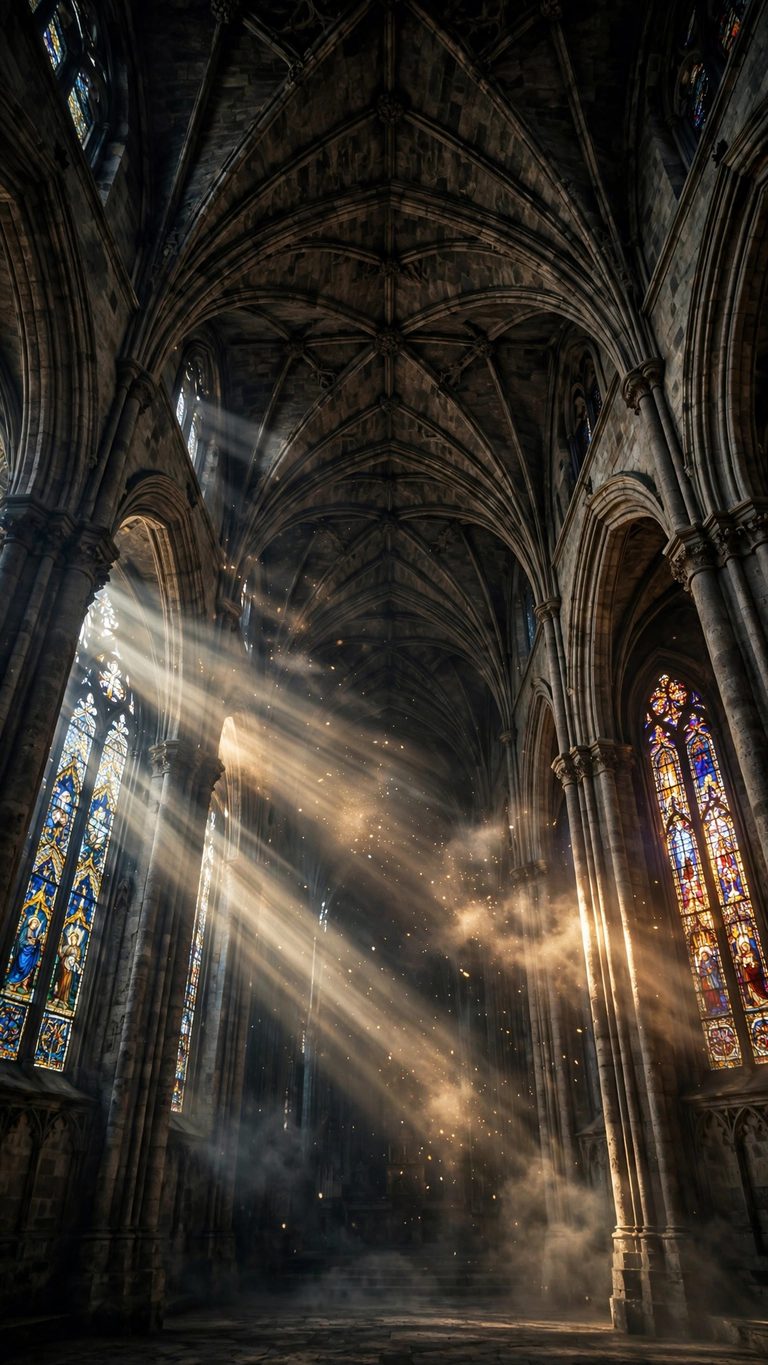
Step inside a gothic cathedral at the exact moment the sun aligns with the stained glass, and the air itself seems to become solid. Volumetric shafts of ruby, sapphire, and gold pour through the ancient windows, cutting the dim nave into planes of colored light. Dust particles drift and dance inside the beams like slow galaxies. The camera tilts upward, past rows of stone columns, toward the vaulted ceiling where centuries of faith seem to hang in the shadows. No dialogue, no narration, just light, stone, and silence so profound you can feel it through the screen. Sacred spaces have drawn pilgrims for a thousand years; on short-form video, they draw millions of viewers seeking a moment of awe in a noisy feed. This prompt recreates that transcendence with AI: the divine geometry of gothic architecture, the physics of light through colored glass, and a slow reverent camera move, all in eight seconds of pure sacred atmosphere.
The Prompt
Paste this prompt exactly as written. It balances the volumetric lighting, the dust particles, and the slow tilt-up that carries the viewer toward the vaults.
Divine interior of a gothic cathedral, volumetric light rays streaming through stained glass windows, dust particles dancing in the beams, camera slowly tilting up toward the vaulted ceiling, organ music mood, sacred awe, ultra realistic, 8k, cinematic, sacred divine atmosphere
Why This Prompt Works
Humans are hardwired to respond to light breaking through darkness; it is one of our oldest visual metaphors for hope, revelation, and the divine. This prompt exploits that wiring with precision. The volumetric light rays are the hero: they give the scene depth, direction, and drama simultaneously, and they photograph, even when AI-generated, with stunning richness. The dust particles dancing in the beams are a masterstroke of detail, because they make the light feel tangible and the air feel alive; viewers unconsciously read particle motion as proof of realism. The slow tilt-up toward the vaulted ceiling is choreography with meaning: upward camera movement is universally associated with aspiration and reverence, physically enacting the act of looking toward heaven. Gothic cathedrals are also ideal AI subjects because their architecture is so geometrically disciplined, pointed arches, ribbed vaults, repeating columns, that models render them with unusual coherence. Culturally, sacred content occupies a unique position: it is shared not just for beauty but for meaning, passed between people as a small gift of peace, which gives it exceptional share velocity. The #Cathedral and #Sacred framing connects to audiences interested in faith, history, architecture, and mindfulness alike, a rare four-quadrant overlap. “Sacred awe” and “sacred divine atmosphere” steer the model away from horror-adjacent gloom, which gothic interiors can easily slip into, and toward warmth and wonder. And the “organ music mood” note, while not generating audio, influences the pacing and gravity of the visuals toward something hymn-like and slow.
How to Use This Prompt
Enter the prompt verbatim into Veo 3, Runway, Kling, Pika, or Sora, using a 9:16 vertical frame and an 8-second duration to suit the slow tilt-up. Keep camera motion settings gentle; the reverence of the scene depends on an unhurried, almost floating ascent. Generate several takes and choose the one where the stained-glass colors project most vividly onto the stone, that colored light play is the signature detail. In editing, this clip begs for sound design: a low organ chord, a soft choir pad, or even cathedral-like reverb on ambient silence will elevate it enormously. Add a slow fade-in from black at the start and a fade to black at the end for a liturgical pacing that suits the subject. If your tool supports it, a very subtle film grain will enhance the ancient-stone texture. For social posting, consider pairing the clip with a short reflective caption or verse; sacred content performs best when the text honors the mood rather than chasing trends. Export at the highest resolution to preserve the fine detail in the glass and carvings.
Pro Tips & Creative Variations
This sacred-light concept adapts beautifully across traditions and moods. Try a dawn variation: “first morning light igniting the rose window,” which gives you a natural narrative of awakening. A candlelit evening version, with “hundreds of votive candles flickering beneath the light shafts,” creates an intimate, prayerful mood perfect for reflective content. You can transpose the idea to other sacred architectures: light through the lattice of a mosque, sunbeams in a Buddhist temple hall, or dawn breaking through a ruined abbey’s open roof, each taps the same psychology with fresh visuals. Camera variations include a slow forward glide down the nave toward the altar, which feels like a processional, or a gentle orbit around a single column wrapped in colored light. For creators building a series, “Sacred Light” as a recurring format, one holy space per episode, can become a beloved calm corner of the internet; consistency of pacing and music builds ritual, and ritual builds returning viewers. Seasonal tie-ins are powerful: cathedral light at Christmas or Easter practically shares itself. One caution for the niche: treat the subject with genuine respect. Audiences can sense the difference between reverent beauty and aesthetic exploitation, and the former earns the deep engagement, saves, and heartfelt comments that algorithms reward. Finally, try a macro variation: extreme close-up of dust motes swirling in a single ruby beam before pulling back to reveal the nave, a reveal structure that hooks curiosity in the first second.
Frequently Asked Questions
Will the stained glass look authentic or generic?
Results vary by tool, but the ‘ultra realistic, 8k’ tags push models toward detailed, plausible glasswork. Generate multiple takes and pick the one with the richest color projection on the stone. Image-to-video from a real cathedral photo can anchor authenticity if you need it.
Is it disrespectful to AI-generate sacred spaces?
Intent and presentation matter most. Content made with reverence, honoring the beauty and meaning of these spaces, is generally received warmly by faith and architecture audiences alike. Avoid sensational or horror-style treatments of real religious sites.
Which tool is best for volumetric light rays?
Veo 3 and Runway currently render the most convincing volumetric lighting and atmospheric dust. Kling is strong on the slow camera move. Compare the beam quality across two or three generations before committing to a final.
How should I use audio with this clip?
A low organ drone, soft choir pad, or spacious ambient reverb transforms the clip. Keep it slow and minimal; the visuals already carry the emotion. Many creators pair sacred clips with reflective captions rather than trending sounds, and it works.
Light through stained glass, dust dancing in sacred beams, and a slow ascent toward the vaults: this AI video prompt captures a moment of transcendence in eight seconds. Generate it, let the silence speak, and offer your audience something the feed rarely gives them: genuine awe.
Related Viral Prompts
- AI Video Prompt: Mesmerizing Orbit Timelapse Around a Dazzling Twisting Helix Skyscraper From Day Into Night
- AI Photo Prompt for Skyscraper Look-Up Shots: Create Stunning Symmetrical Glass Tower Architecture Photos
- AI Photo Prompt for Temple Carving Macro Shots: Capture Ancient Stone Detail in Ultra-Detailed Heritage Photos
# A I V i d e o # P r o m p t B a z a r # C a t h e d r a l # L i g h t R a y s # S a c r e d

Leave a Reply