
Introduction
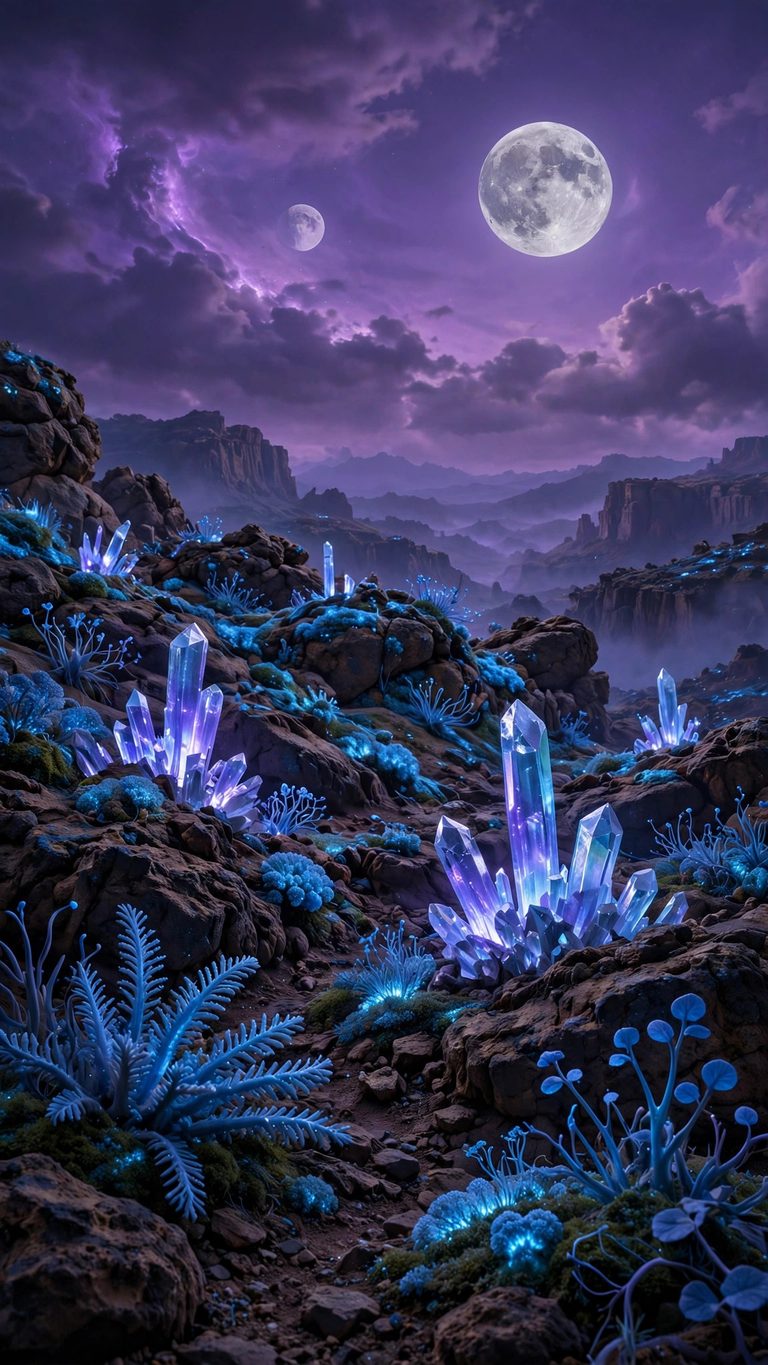
The sky is purple. Two moons hang in it — one small and sharp, one huge and hazy. Beneath your wheels, the ground crunches with rocks the color of dried blood, and all around you, crystal formations pulse with their own inner light while blue vegetation sways in a wind you cannot feel. You are not on Earth. You have never been on Earth, in this moment. The Alien Planet Surface Walk AI video prompt delivers the single most intoxicating promise in all of science fiction — another world, firsthand — through the bumpy, dust-kicked point of view of a rover rolling across an exoplanet. There is a reason every great sci-fi story begins with arrival: the human brain is wired to reward exploration. New environments trigger dopamine the way sugar triggers taste buds, and this prompt mainlines that chemistry straight into a vertical video. No humans, no dialogue, no plot — just the slow reveal of a world that obeys different rules. In this article you will get the exact copy-paste prompt, a breakdown of the worldbuilding craft that makes it magnetic, and a complete workflow for generating and publishing it with Veo 3, Runway, Kling, Pika, or Sora.
The Prompt
Copy the prompt below exactly as written and paste it into your favorite AI video generator:
Alien rover POV rolling across a strange exoplanet surface, purple sky with two moons, glowing crystal formations, bizarre blue vegetation swaying, camera bumping gently over rocky terrain, otherworldly and mysterious, ultra realistic, cinematic sci-fi realism, 8k
Why This Prompt Works
This prompt works because it understands a fundamental truth about virality: people do not share videos, they share feelings, and the feeling of discovering an alien world is one of the most shareable feelings there is. The prompt’s first masterstroke is the rover POV. “Alien rover POV rolling across a strange exoplanet surface” with “camera bumping gently over rocky terrain” does two things at once: it gives the shot documentary credibility — this is how we actually explore Mars today, through rovers — and it adds micro-motion, the tiny shakes and jolts that tell the viewer’s body this is real footage, not a painting. Smooth, gliding alien landscapes look like screensavers; bumpy ones look like missions. That physical imperfection is the difference between a scroll-past and a save.
The second masterstroke is the density of alien signifiers. A lesser prompt would say “alien planet” and stop; this one stacks five: a purple sky, two moons, glowing crystal formations, bizarre blue vegetation, and rocky terrain. Each one is a small violation of Earth’s rules, and violations compound — two moons is strange, but two moons plus glowing crystals plus blue plants is a world. Crucially, the prompt keeps every element visual rather than conceptual. It never explains the planet; it shows it, which is exactly how the best sci-fi worldbuilding works. The phrase “otherworldly and mysterious” sets the emotional grade, while “ultra realistic, cinematic sci-fi realism, 8k” pushes the model away from cartoonish alien clichés and toward the grounded, NASA-meets-Hollywood aesthetic that audiences trust. The result is a clip that activates the viewer’s imagination engine — within seconds, they are inventing stories about this place, and content that makes people imagine is content people talk about.
How to Use This Prompt
Follow these steps to turn the prompt into a finished vertical video, ready for Reels, Shorts, and TikTok:
- Choose your generator. Open Veo 3, Runway Gen-4, Kling 2.x, Pika 2.x, or Sora. Kling and Veo 3 render the most convincing terrain physics for the bumpy rover motion; Runway excels at the glowing crystal light effects.
- Paste the prompt exactly. Copy the entire text from the
block above into the text-to-video field. Do not drop "two moons" or "bumping gently" — those are the highest-value phrases in the whole prompt.
- Set 9:16 vertical. Vertical framing stacks the alien sky, the horizon, and the foreground terrain into a natural three-layer composition that reads beautifully on phones.
- Set the duration. Generate an 8-second clip matching the prompt's rover pace. The brevity forces the model to keep the scene dense — every second has to earn its place.
- Generate several expeditions. Run four to five generations and pick the take with the most convincing terrain bump and the clearest twin moons. Reject any version where the sky looks like a flat purple gradient with no depth.
- Add alien audio. Layer wind-like synth textures, deep resonant hums, or crystalline chimes that match the glowing formations. Otherworldly sound design can double watch time on sci-fi content.
- Caption for curiosity. Try: "Rover cam: Sol 1 on Kepler-186f. Two moons. Breathable? Unknown." plus hashtags #alienplanet #exoplanet #scifi #aivideo #space. Post to Reels, Shorts, and TikTok together.
Pro Tips & Creative Variations
Your greatest creative lever here is world consistency — treat the planet like a real place and your audience will treat it like one too. Start a series: "Sol 1" (landing), "Sol 2" (the crystal field), "Sol 3" (the blue forest), each generated from remixed versions of this prompt with one changed variable. Serialized alien exploration is binge-bait; viewers who find episode three will hunt down episodes one and two, which multiplies your profile visits. When remixing, change only one element at a time — keep the purple sky and twin moons constant across episodes so the world feels coherent, and vary the terrain, vegetation, or time of day. Consistency is what separates a random collection of clips from a universe people follow.
For single-video impact, experiment with the "rule of alien": every remix should contain exactly one thing that could not exist on Earth, rendered with total realism. "A river of liquid glass," "floating rock islands," "a third moon rising" — each is a one-line addition that creates a brand-new viral moment from the same chassis. You can also flip the perspective for a sequel: "overhead drone shot following the rover's tracks" gives viewers the map to go with the territory, and map shots trigger a completely different pleasure — the joy of understanding a place. Another high-performing variation is the life-detection tease: add "a small movement at the edge of frame, something alive, gone in a second" and caption it "did you see it?" Comments will flood with timestamps, replays will spike, and the algorithm will take notice. Finally, consider the day-night cycle: a night version with the crystals as the primary light source and both moons glowing is so visually distinct from the day version that you can post them as a pair and double your output from one idea.
Frequently Asked Questions
Q: How do I keep the planet consistent across a multi-episode series?
A: Change only one variable per episode and keep anchor elements — the purple sky, the twin moons, the crystal formations — identical in every prompt. Generate all episodes in the same tool and session when possible, since models drift between sessions. Some creators also generate a "planet bible": a reference image of the world that they feed back as an image prompt for each new episode.
Q: My alien planet looks cartoonish instead of realistic. How do I fix it?
A: The culprit is usually oversaturated color combined with smooth motion. Keep the prompt's "ultra realistic, cinematic sci-fi realism" tags, add "natural lighting, physically plausible materials," and make sure the camera bumps — that micro-imperfection is the fastest cure for the cartoon look. Generating at higher resolution and adding subtle film grain in post also grounds the image.
Q: Can I build a whole sci-fi story around these clips?
A: Yes, and you should. The rover POV is a perfect narrative vehicle: add mission-log voiceovers ("Sol 14. The crystals are humming today."), and you have an episodic story with near-zero production cost. Several creators have grown large followings with exactly this format — the audience's imagination does the expensive worldbuilding for free.
Q: Will viewers care that the planet is fictional?
A: Not if you frame it honestly and playfully. Label it an "AI concept" or "imagined exoplanet" and lean into the fiction — give the planet a name, a designation, a mission log. Audiences love collaborative make-believe far more than they resent being fooled, as long as the frame is clear from the start.
Every child who ever looked at the stars wondered what it would be like to stand on another world. This prompt is the closest most of us will ever get — purple sky, twin moons, crystals humming in the dark. Copy it, roll the rover, and let your viewers explore. The planet is waiting.
Related Viral Prompts
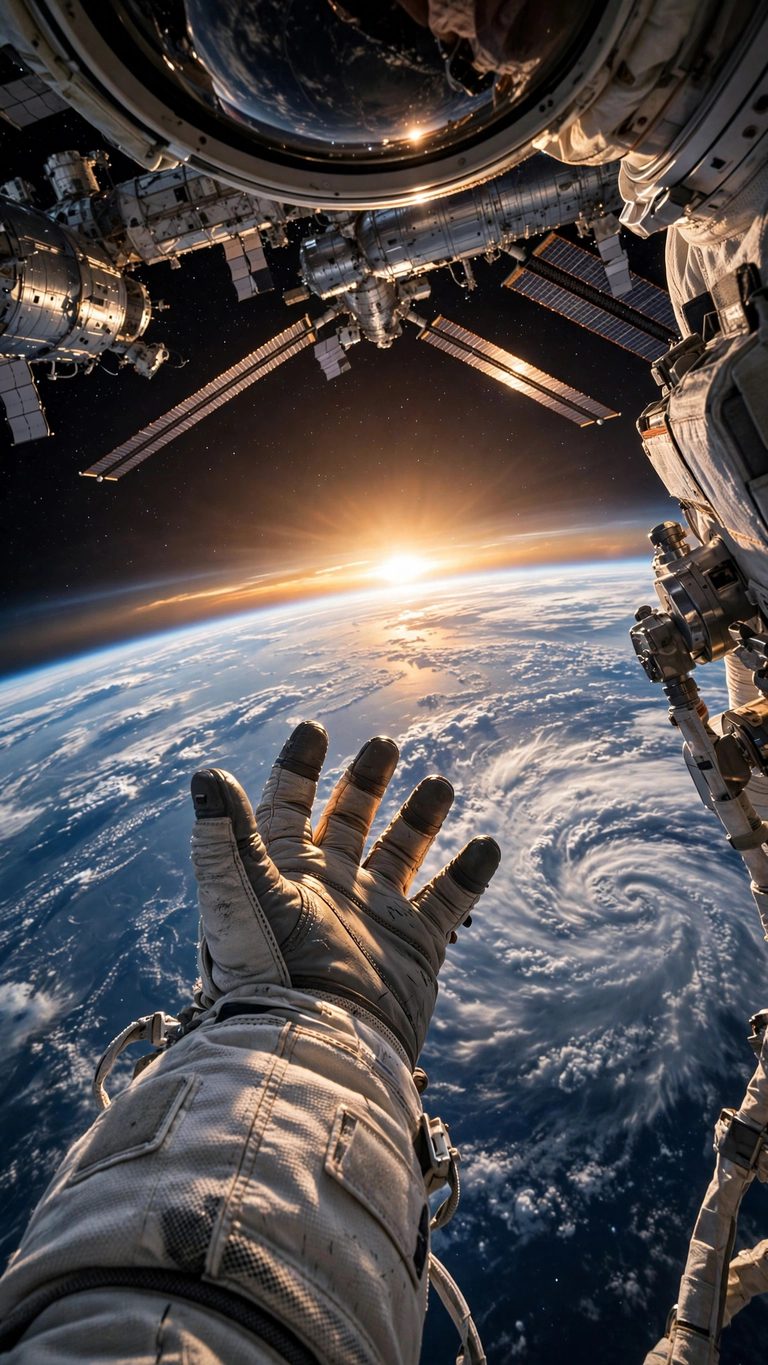
- Space Station Sunrise Orbit AI Video Prompt: Watch the ISS Glide Over Earth at Sunrise in Stunning 8K
- Nebula Flythrough AI Video Prompt: Soar Through a Dreamlike Pink, Teal & Gold Cosmic Storm Free Viral Clip
- Moon Footprints Earthrise AI Video Prompt: Recreate the Iconic Lunar Moment That Made History for Free
# A I V i d e o # P r o m p t B a z a r # A l i e n P l a n e t # E x o p l a n e t # S c i F i

Leave a Reply