
Introduction
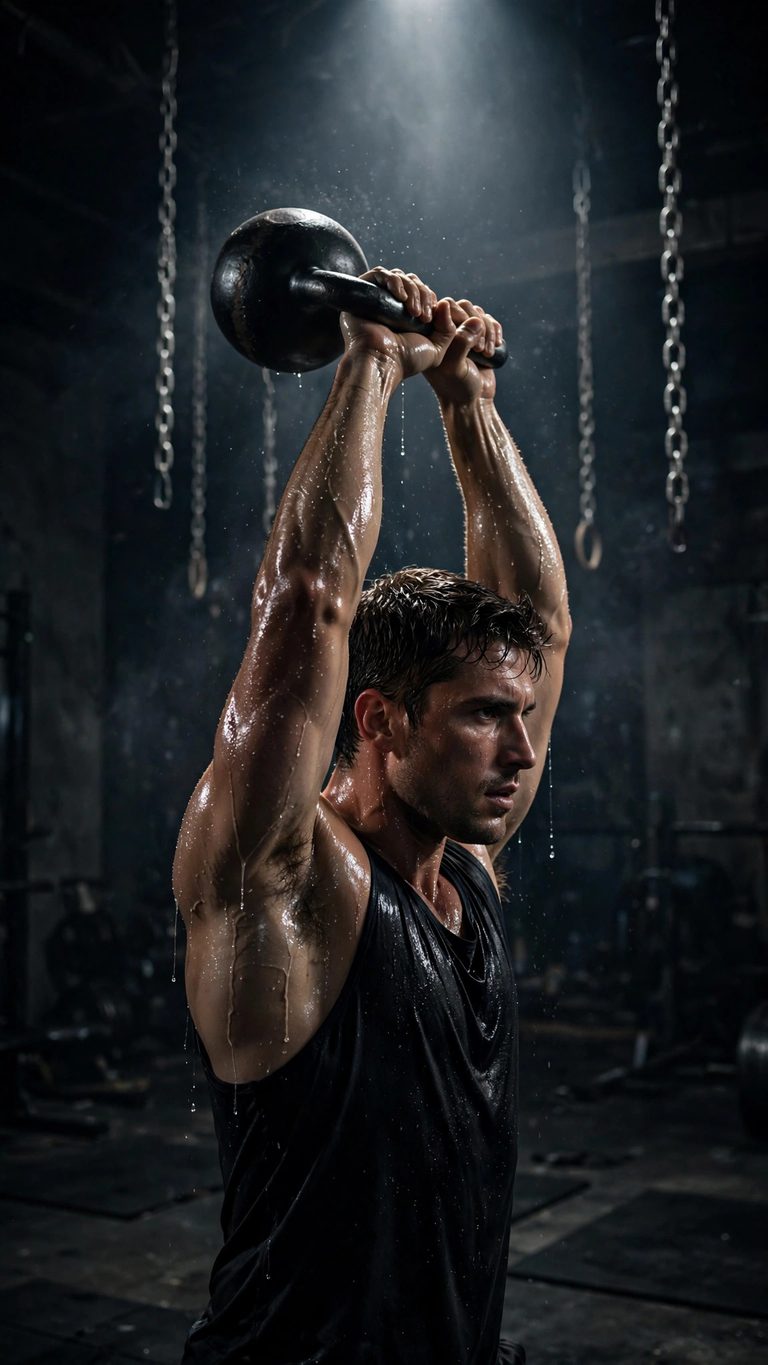
Some workouts look like exercise. The kettlebell swing, filmed right, looks like ritual. A single overhead spotlight in a dark gym, chains hanging blurred in the background, an athlete driving the bell upward in powerful rhythm while sweat glistens on their shoulders: it is chiaroscuro lighting worthy of a Renaissance painting, applied to one of the most primal movements in fitness. This AI video prompt captures that dark, moody aesthetic that is currently dominating Reels and Shorts. The low-angle push-in makes the athlete look monumental, the kettlebell blurs at the top of each swing in a way that reads as pure power, and the film-like grain wraps everything in an analog authenticity that digital footage rarely achieves. Dark gym aesthetics have become a visual shorthand for serious training content; when viewers see that single spotlight and those deep shadows, they brace for something intense before the first rep even happens. Creators love this prompt because mood is the hardest thing to manufacture on a phone and the easiest thing to generate with the right words. One prompt, a few minutes of rendering, and you own a clip that looks like a still from a Hollywood sports film. If your content strategy needs gravity, this is where you find it.
The Prompt
Here is the complete original prompt. Copy it exactly as written and paste it into your AI video generator of choice.
Moody shot of an athlete performing powerful kettlebell swings in a dark moody gym, single overhead spotlight, kettlebell blurring at the top of each swing, sweat glistening on shoulders, camera low angle pushing forward, chains hanging in background, dramatic chiaroscuro lighting, rhythmic powerful motion, film-like grain, ultra realistic, cinematic, 8k
Why This Prompt Works
This prompt is a lighting design disguised as a video description, and that is why it outperforms generic gym prompts so dramatically. Single overhead spotlight plus dramatic chiaroscuro lighting gives the model an exact, physically coherent lighting rig: one hard source from above, deep shadows everywhere else. Video models render simple, high-contrast lighting far more convincingly than complex multi-source setups, because strong contrast hides rendering imperfections in the shadows while the highlights carry the detail. Darkness is doing computational work here, not just mood work.
The motion description is equally smart. Rhythmic powerful motion tells the model the movement is cyclical and continuous, which is the easiest class of motion for generators to sustain without drifting. Kettlebell blurring at the top of each swing requests motion blur at a specific phase of the movement, and phase-specific blur is a sophisticated instruction that the best models honor beautifully: it concentrates the sense of speed exactly where the bell changes direction, which is also where real cameras would blur. Sweat glistening on shoulders supplies specular highlights for the spotlight to play on, giving the light something to do beyond illuminating skin.
The camera move is simple and reliable: low angle pushing forward. A slow push-in is geometrically trivial for the model to execute, and the low angle does narrative work, making the athlete loom with dominance and power. Chains hanging in background adds layered depth: a blurred midground element that creates parallax as the camera pushes in, and parallax is a primary depth cue for realism. The phrase dark moody gym is doing double duty as setting and grade, reinforced by film-like grain, which masks the subtle digital smoothness that can betray AI footage. The closing stack of ultra realistic, cinematic, 8k sets the quality ceiling. Notice the prompt never wastes words on vague intensifiers; every clause is a concrete, renderable instruction. That discipline is the difference between a prompt that sometimes works and one that works every time.
How to Use This Prompt
Moody low-light renders need deliberate setup to avoid muddy results. Follow these steps, tuned to the post settings of 9:16 vertical, 8 seconds, low angle push-in.
- Choose your generator. Paste the prompt into Veo 3, Kling, Runway, Pika, or Sora. Veo 3 and Sora currently handle single-source dramatic lighting with the richest contrast; Kling renders the kettlebell motion blur especially well.
- Set 9:16 vertical and 8 seconds. The low-angle push-in composition is inherently vertical, framing the athlete from bell to face, and eight seconds captures roughly four to six full swings, which is the ideal rhythmic sample.
- Protect the shadows. If your generator offers exposure or contrast controls, keep them neutral or slightly contrasty. Do not brighten the render afterward; lifting the shadows destroys the chiaroscuro effect and exposes artifacts the darkness was hiding.
- Generate three to four takes. Watch each for kettlebell shape consistency across swings and for the athlete’s posture staying plausible. Reject any take where the bell deforms or the swing rhythm stutters.
- Consider a seamless loop. Because the motion is rhythmic, you can often loop the clip by cutting at the top of a swing where the bell position matches. A perfect loop of kettlebell swings is hypnotic and earns heavy rewatch rates.
- Finish with restraint. Grade gently toward warm amber in the highlights, add a deep, minimal caption, and pair with dark, percussive audio. The mood is the message; let it breathe rather than cluttering the frame with text.
Pro Tips & Creative Variations
Once the base render is solid, these refinements deepen the cinema. Strengthen the background by appending chains hanging blurred in background catching rim light. Chains are already in the prompt, but explicitly asking for rim light on them turns a background prop into a glinting texture layer that sells the industrial gym. For color control, add warm amber spotlight tone to lock the light’s color temperature; without it, some models drift toward cold white, which reads as clinical rather than moody.
Lighting variations create entirely different films from the same movement. Swap the overhead spot for a single side light raking across the athlete, requested as hard side light sculpting the athlete from darkness, for an even more sculptural, fine-art treatment. A backlit version with the athlete nearly silhouetted against a glowing doorway turns the swing into pure shape and rhythm. For a modern twist, add subtle volumetric haze: light haze catching the spotlight beam. Haze makes light visible as a cone, which is one of the most cinematic effects available and costs you nothing.
Build the concept into a series. Generate matching dark-gym clips for the deadlift, the sled push, and battle ropes using identical lighting language, single overhead spotlight, chiaroscuro, film-like grain, and release them as a dark training anthology. Consistency of grade across the series is what makes it feel like one director’s work. For coaches, this aesthetic is premium branding: use the clip as a recurring intro bumper for your own filmed content and your production value jumps overnight. Audio design seals it: a deep, slow percussive pulse synced to each hip snap, the metallic ring of the bell handle, and near-silence between reps. That restraint is what separates moody from merely dark. Post with dark aesthetic and kettlebell hashtags, and watch the saves accumulate from viewers who collect this exact vibe.
Frequently Asked Questions
Why does my render look too dark or muddy? Low-light prompts walk a fine line. If the result is murky, regenerate rather than brightening in post, and consider adding faint fill light preserving deep shadows to the prompt. This keeps the chiaroscuro structure while lifting just enough detail into the mid-tones for phone screens, which crush shadows more than desktop monitors.
Can I loop the kettlebell swing seamlessly? Often yes, because the motion is cyclical. Find two frames at the top of the swing where the bell and body positions match, cut there, and crossfade over two to three frames. Test the loop at full speed; if the rhythm hiccups, nudge the cut point by a frame or two until the swing feels continuous.
Which generator handles dark scenes best? Veo 3 and Sora currently produce the cleanest shadow detail with the least noise, while Kling and Runway are strong but occasionally crush the blacks. Pika is fastest for iterating on the look. Whichever you use, export at maximum bitrate: compression artifacts are most visible in dark gradients.
How do I keep a series visually consistent? Copy the exact lighting and grading phrases, single overhead spotlight, dramatic chiaroscuro lighting, film-like grain, cinematic, into every prompt in the series, and use the same seed or reference settings if your generator supports them. Consistent language in means consistent cinema out.
Darkness, rhythm, and a single beam of light: that is all this prompt needs to turn a kettlebell swing into cinema. Paste it into Veo 3 or Kling, generate vertical 9:16 with an 8-second low-angle push-in, loop the cleanest take, and let the mood do the talking. Try the kettlebell swing prompt today and give your feed some gravity.
Related Viral Prompts
- Battle Ropes Intensity: The Ultimate AI Video Prompt for Viral Slow-Motion Gym Workout Reels That Hit Hard
- Cliff Rock Climbing at Golden Hour: Epic AI Video Prompt for Breathtaking Adventure Drone Reel Shorts
- Underwater Swimming Laps: Mesmerizing AI Video Prompt for Serene Cinematic Pool Cinematics in Slow Motion
# A I V i d e o # P r o m p t B a z a r # K e t t l e b e l l # G y m # D a r k A e s t h e t i c # V i r a l R e e l s

Leave a Reply