
Introduction
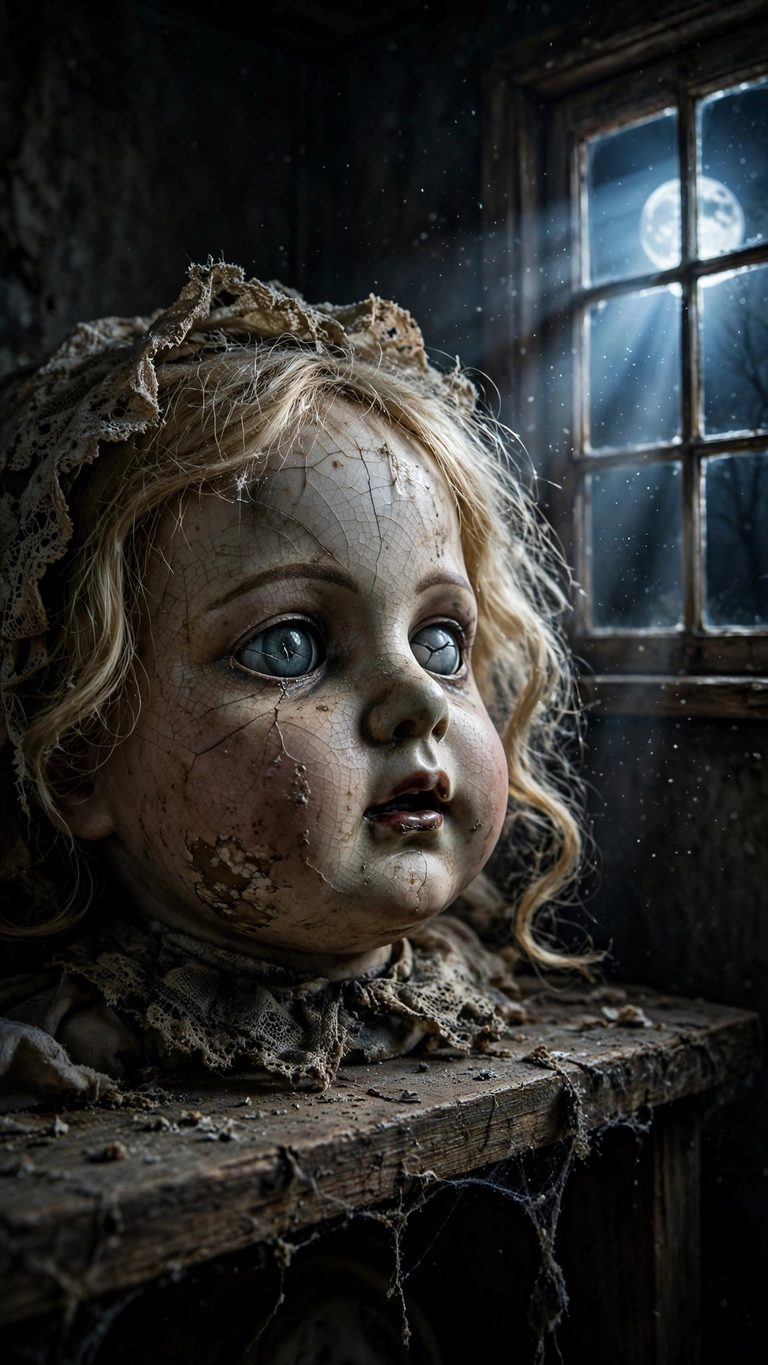
The scariest horror is the kind you almost miss. This prompt frames a creepy close-up of an antique porcelain doll on a shelf in a dark room, dust particles drifting through moonlight, and then the impossible happens: its eyes slowly move to follow the camera. No scream, no chase, no monster lunging from the dark. Just a painted gaze that should be frozen and is not. Subtle horror like this burrows deeper than any jump scare because it leaves the viewer unsure whether they actually saw it, and uncertainty is a far more durable fear than shock. Doll horror has its own devoted corner of the internet, from haunted-doll collectors to uncanny-valley enthusiasts, and a clip this restrained is engineered for replays, freeze-frames, and whispered did its eyes just move comments. In this article you will get the exact AI video prompt, the psychology of why watching eyes trigger primal alarm, a step-by-step workflow for Veo 3, Runway, Kling, Pika, and Sora, plus sound design, escalation formats, and series ideas that turn one porcelain stare into a channel-defining saga.
The Prompt
Copy and paste this exact prompt into your AI video generator:
Creepy close-up of an antique porcelain doll on a shelf in a dark room, its eyes slowly moving to follow the camera, dust particles, moonlight, subtle horror, ultra realistic, chilling
Why This Prompt Works
This prompt works because it aims directly at one of the oldest alarm systems in the human brain: gaze detection. Humans are exquisitely tuned to notice when something is looking at them, a survival trait from an era when being watched usually meant being hunted. When the doll eyes move to track the camera, every viewer feels personally watched, and that feeling bypasses logic entirely. You can know it is AI-generated and still feel the skin on your neck tighten. The uncanny valley does the rest of the work. A porcelain doll is almost human but not quite, and the almost is what disturbs us. A fully inhuman monster is fantasy; a nearly human face that moves wrong is a glitch in reality. By keeping the horror subtle, the prompt avoids the desensitization problem of loud horror. Jump scares exhaust their power with repetition, but a slow eye movement stays creepy on the fiftieth viewing because the brain never fully files it as safe. The dust particles drifting through moonlight are a subtle masterstroke too: they prove the air is real and the scene has depth, which makes the eye movement feel embedded in a physical room rather than pasted on. On the platforms, subtle horror has a distinct viral signature built on replays and investigation. Viewers watch once, feel uneasy, watch again to confirm, then scrub frame by frame, and every one of those actions feeds the algorithm watch-time signals. The comments become a collective investigation, timestamps and theories and friends tagged with look at its eyes, which is the exact comment pattern that pushes clips into wider distribution. The haunted-doll niche itself is evergreen, fueled by collector culture, paranormal communities, and the endless fascination with objects that seem to hold something inside them. Shareability here is intimate: people do not blast this clip to everyone, they send it to one specific friend with you need to see this, and those targeted shares convert into follows at a remarkably high rate.
How to Use This Prompt
Restraint is the entire technique, so generate with a light touch. Open Veo 3, Runway, Kling, Pika, or Sora and paste the full prompt verbatim, keeping the close-up framing, the antique porcelain doll, the eyes slowly moving to follow the camera, the dust particles, the moonlight, and the subtle horror tag. Set 9:16 vertical and 8 seconds, and keep the camera move minimal: a very slow push-in toward the doll face, or better yet, a slow lateral drift so the eye-tracking has visible motivation. If the camera does not move, the eyes have nothing to follow and the effect falls flat. Generate several takes and study the eyes closely in each. You want a slow, smooth tracking motion, not a snap or a twitch. The ideal take has the eyes lag just slightly behind the camera, as if the doll is straining to keep watching, which reads as intent rather than animation. Reject any take where the whole head moves or the face warps; the horror depends on everything being still except the eyes. In your editor, keep the grade cold: blue moonlight, deep shadows, the doll face half-lit. Add sound at a whisper level: a faint music-box melody slightly out of tune, or just room tone with the tiniest high shimmer. Post late evening, 8 PM to 11 PM local time, when viewers are alone with their screens and their gaze-detection instincts are fully armed. Caption it minimally, something like she watches, and tag #creepy #doll #horror #uncanny #aihorror to reach both horror and oddity communities.
Pro Tips & Creative Variations
Sound design for subtle horror is about what is almost there. A music box playing a half-remembered lullaby, pitched down two semitones and allowed to wobble as if the mechanism is failing, will unsettle viewers more than any scream. Alternatively, try total near-silence with a single faint element: a soft wooden creak from the shelf, as if the doll shifted its weight. Never explain the sound in your caption; unexplained audio makes viewers listen harder, and listening harder makes them more afraid. For variations, the escalation ladder is your best friend. Episode one: the eyes follow the camera. Episode two: the doll blinks, once, at the very end. Episode three: the head has turned slightly between episodes and nobody acknowledges it except your pinned comment. Each step is tiny, each is deniable, and together they build a mythology your followers will obsess over. Other strong variants include the smile change, where the painted mouth seems different in the final frame, the relocation scare, where the doll appears in a different room in each video with no explanation, and the reflection variant, where the doll eyes move only in a mirror behind it. For series branding, give her a name, The Porcelain Watcher or just her name, Mabel, because named entities get fan theories, fan art, and fierce loyalty. End episodes on the held gaze with no payoff, and use duet bait by posting a version where the movement is barely perceptible and asking viewers to stitch their reaction when they spot it. One craft warning: resist the urge to make the doll do more. The moment she stands up or speaks, you have left subtle horror and entered a different genre. Her power is that she barely moves at all.
Frequently Asked Questions
How subtle should the eye movement be?
Q: Should viewers notice the eyes moving on first watch?
A: Aim for the threshold of perception: about half your viewers should feel something was wrong without being sure what, and the other half should catch it clearly. That split is what generates the did you see it comment war. If everyone sees it instantly, it is a trick; if nobody sees it, it is a screensaver. Test on a friend before posting.
Which tool handles the eye tracking best?
Q: My renders keep warping the doll face. What works?
A: Small facial motions are demanding for video models, so expect to generate five to eight takes. Veo 3 and Runway currently hold facial structure most stably during subtle motion. If warping persists, try image-to-video: generate a perfect still of the doll first, then animate only the eyes with a motion brush or region prompt if your tool supports it.
Can subtle horror really go viral without a jump scare?
Q: Do quiet clips compete with loud ones?
A: Absolutely, through a different mechanism. Loud clips win on shock shares; quiet clips win on replays, saves, and investigation comments. The algorithm values total watch time and interaction depth, and a clip viewers watch four times to confirm the eyes moved often outperforms a jump scare watched once.
How do I turn the doll into a series character?
Q: What is the best format for ongoing doll content?
A: Name her, keep her appearance identical across episodes, and escalate impossibly slowly: eyes, then a blink, then a turned head, then a new location. Number the episodes, never explain anything in captions, and let the comments section write the lore for you. Community-built mythology is the strongest retention engine in horror.
The porcelain doll proves that the quietest horror is often the hardest to shake. Copy this prompt, hunt for the take where her eyes lag just behind your camera, mix in that failing music box, and post her after dark with two words: she watches. Then sit back as your comments fill with viewers who cannot agree on what they saw, and cannot stop watching.
Related Viral Prompts
- Knocking on the Window During a Thunderstorm: Viral AI Horror Video Prompt for a Terrifying Short (Free)
- Whispers in a Pitch-Dark Forest: Viral AI Horror POV Video Prompt for a Chilling Found-Footage Short (Free)
- Flickering Elevator Lights and a Mirror Extra Person: Viral AI Horror Video Prompt for a Jump-Scare Short (Free)
# A I V i d e o # P r o m p t B a z a r # D o l l # C r e e p y # H o r r o r

Leave a Reply