
Introduction
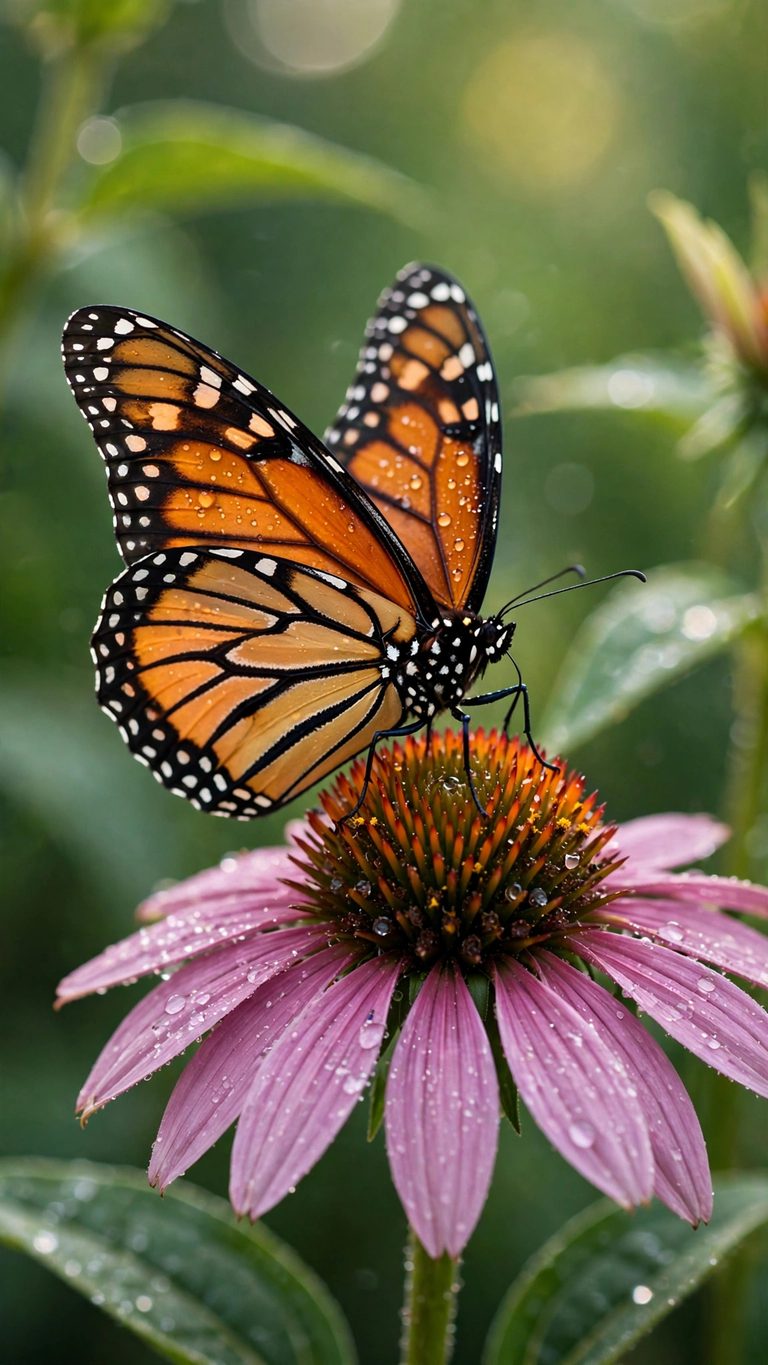
Of all the encounters in nature, few are as quietly perfect as a butterfly at rest on a flower. The monarch butterfly, with its stained-glass wings of orange and black, is basically flying art, and when it settles on a purple coneflower, the color contrast is something painters dream about. Wildlife macro photographers spend hours in meadows for a shot like this, waiting for the butterfly to land, hold still, and open its wings at exactly the right angle. This AI photo prompt skips the waiting. It renders a perfect macro of a monarch butterfly resting on a purple coneflower, wings spread to show every intricate pattern, morning dew beading on the wings, soft green bokeh melting the background away. The detail is exquisite enough for nature magazines and dreamy enough for phone wallpapers. In this guide you will get the exact prompt, a full breakdown of why it works so well, step-by-step workflows for Midjourney, DALL-E 3, and Flux, and creative variations that take you from garden mornings to tropical nights.
The Prompt
Copy the exact text below and paste it into your favorite AI image generator. No edits are needed for a stunning first result:
Perfect macro photograph of a monarch butterfly resting on a purple coneflower, wings spread showing intricate orange-black patterns, morning dew on wings, proboscis curled, soft green bokeh, exquisite detail, ultra detailed, 8k, professional macro photography, photorealistic
Why This Prompt Works
This prompt is precision engineering disguised as poetry. It begins with the subject stated as both species and action: a monarch butterfly resting on a purple coneflower. Naming the species matters enormously. A generic butterfly gives the model license to invent anatomy, but monarch pulls from the model’s strong training data on one of the most photographed insects on earth, dramatically improving wing-pattern accuracy. Pairing it with a purple coneflower is a color-theory masterstroke: orange and purple are near-complements, so the butterfly pops off the flower with maximum visual tension, exactly why real nature photographers seek this combination. The pose instruction, wings spread showing intricate orange-black patterns, solves the biggest failure mode of butterfly images, folded or half-open wings that hide the beauty. It demands the money shot: full dorsal view, patterns on display. Then the micro-details elevate it from good to exquisite. Morning dew on wings adds sparkle and a time-of-day story, tiny beads catching light along the wing edges. Proboscis curled is the kind of hyper-specific naturalist detail that separates convincing macro from cartoon; it signals feeding behavior and gives entomology-minded viewers something to admire. The background, soft green bokeh, is the classic meadow look, green blur that isolates the subject while keeping the garden context. Finally the quality stack, exquisite detail, ultra detailed, 8k, professional macro photography, photorealistic, pushes texture fidelity where it counts: wing scales, the fuzzy thorax, the spiky coneflower center. Notice the prompt never wastes words on vague beauty adjectives; every phrase is either anatomy, optics, or camera language, which is why the results are so consistently stunning.
How to Use This Prompt
Follow this workflow to land a frame-worthy butterfly macro. On Midjourney, paste the prompt with --ar 2:3 and --v 7. Butterfly wing symmetry is the thing to inspect: generate four variations and pick the one where both wings mirror cleanly with no melted patterns. If one wing is perfect and the other is not, use Vary (Region) on the flawed side. On DALL-E 3, paste the prompt exactly and add in vertical 2:3 portrait format. DALL-E renders insect anatomy quite faithfully from species names, so the monarch pattern usually lands well; if the proboscis looks odd, ask for the curled proboscis clearly visible beneath the head in a follow-up. On Flux, keep the full prompt and set portrait ratio before generating; Flux’s texture rendering shines on wing scales and dew beads. Whichever tool you use, view the result at 100 percent zoom and check three things: wing pattern symmetry, six legs plausibly placed, and antennae intact. These are the details viewers subconsciously audit. A final pass of gentle sharpening makes the wing patterns sing, and the image is ready for anything from a nature post to a framed print.
Pro Tips & Creative Variations
One butterfly becomes a whole field guide with the right swaps. Change the species for new palettes: a blue morpho butterfly on a pink hibiscus delivers electric blue against tropical pink, a swallowtail on lavender gives you elegant yellow-on-purple, and a painted lady on a sunflower keeps the orange story with a wilder pattern. Change the flower to change the mood: white daisies for minimalism, red zinnias for bold contrast, milkweed blossoms for ecological authenticity, since monarchs actually feed on milkweed. Time of day is a powerful lever: golden hour backlight glowing through translucent wings is pure magic, after rain with droplets everywhere adds sparkle, and a night scene with the butterfly lit by moonlight turns the concept mysterious. Add behavior for storytelling: wings mid-flap taking off from the flower captures motion, two butterflies courting around the bloom adds romance, and a caterpillar on the stem below tells the full life-cycle story in one frame. For educational content, generate the same monarch at extreme macro of a single wing section to show the scale-like texture, perfect for carousel posts that zoom deeper with each swipe. If you build wallpapers, try a wide version with generous green bokeh on both sides. And for seasonal series, pair this summer monarch with autumn leaves or spring blossoms variants. Nature never repeats itself, but your prompt can.
Frequently Asked Questions
Why specify a monarch instead of just a butterfly? Species names tap into the model’s strongest visual training data. Monarchs are among the most photographed butterflies in the world, so the model renders their orange-black-white patterns far more accurately than it would an invented generic butterfly.
What should I check for anatomical errors? Inspect wing symmetry, count the legs (six), and check the antennae and proboscis. These small features are where AI butterflies most often fail, and a quick zoom check before publishing saves you from comments pointing out extra legs.
Which tool is best for insect macro detail? Midjourney v7 and Flux both render wing-scale texture beautifully. DALL-E 3 is very reliable on the overall composition and species pattern. For extreme close-ups of wing texture, Midjourney with --style raw tends to give the most photographic result.
Can I use this style for other insects? Yes, the structure transfers directly. Swap in a honeybee, a dragonfly, or a ladybug with a matching flower, keep the dew, bokeh, and quality stack, and you have an instant macro series with a consistent look.
A butterfly on a flower is nature’s way of showing off, and this prompt captures the show in perfect detail. Paste it, pick your species, and let those wings spread across your feed. The meadow is waiting, so go create it.
Related Viral Prompts
- Sunflower Bee AI Photo Prompt: Capture a Honeybee Covered in Golden Pollen Glowing in Warm Sunset Backlight
- Lotus Top View AI Photo Prompt: Create a Stunning Zen Pond Masterpiece With Midjourney, DALL-E 3 & Flux
- Tulip Rows AI Photo Prompt: Generate Stunning Geometric Dutch Flower Field Photography in Seconds Flat
# A I V i d e o # P r o m p t B a z a r # A I P h o t o # B u t t e r f l y # M a c r o

Leave a Reply