
Introduction
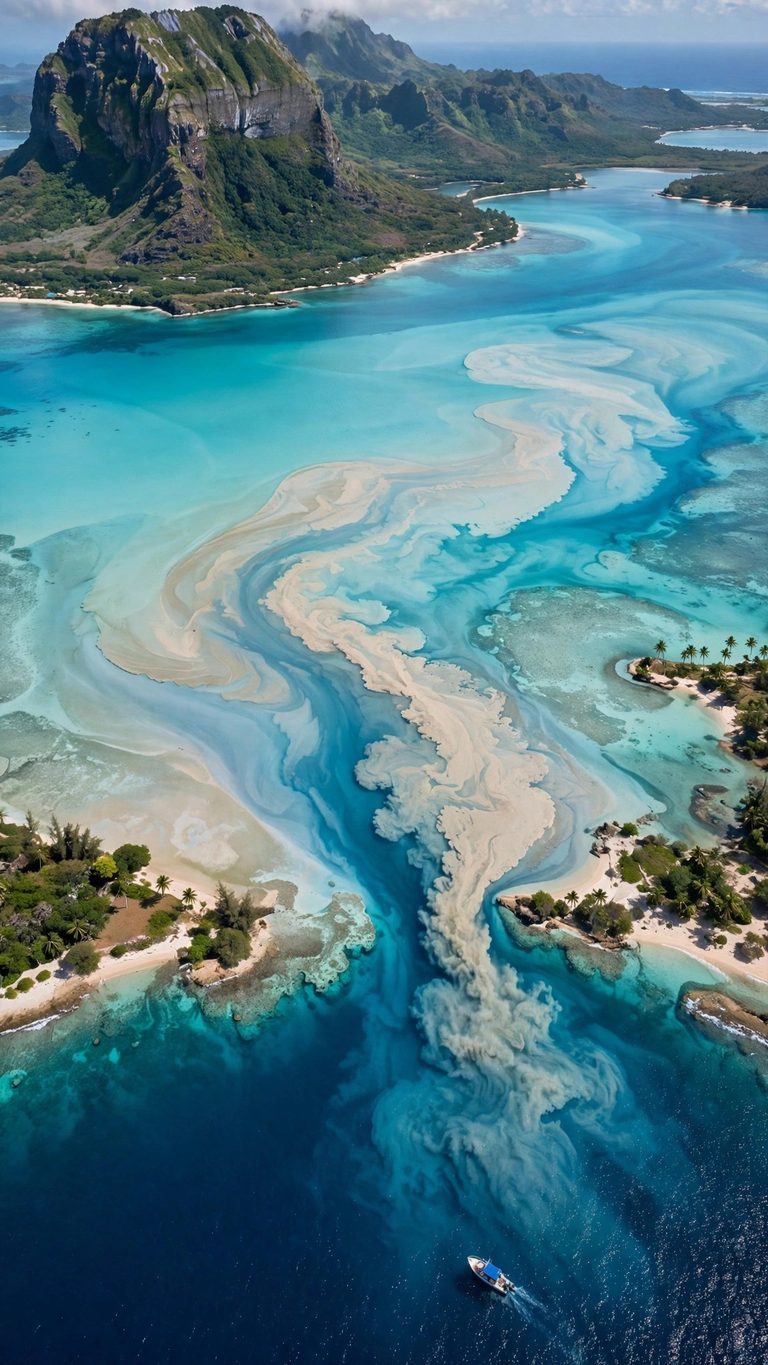
Some images do not just get liked — they get argued about. The underwater waterfall illusion off the coast of Mauritius is one of them: from the air, sand and silt cascading over the ocean shelf look exactly like a waterfall plunging beneath the waves, and first-time viewers routinely refuse to believe it is real. That disbelief is pure viral fuel. AI-generated ocean content goes viral fastest when it breaks the viewer’s mental model, because confusion triggers comments, comments trigger reach, and reach triggers the reposts that carry an image across platforms. “Wait, how is this possible?!” is the highest-converting caption in nature content, and this illusion earns it honestly — the phenomenon is real, photographed by drones for years. The prompt below recreates the surreal aerial view in photorealistic detail, boat and all, giving you the mind-bending frame without chartering a helicopter. This article breaks down why the illusion hooks viewers, how to generate it faithfully, and how to caption it for maximum debate-driven engagement.
The Prompt
Here is the exact prompt behind this image. Copy it word for word into your AI image generator — every adjective was chosen to steer the model toward a photorealistic, viral-ready result.
Surreal aerial photograph of the underwater waterfall illusion off Mauritius, sand and silt creating the look of a plunging cascade beneath turquoise water, a boat floating at the edge for scale, swirling patterns of blue and white, mind-bending natural trick, ultra detailed, 8k, photorealistic, aerial photography
Why This Prompt Works
This prompt works because it weaponizes cognitive dissonance. The brain sees a waterfall where water cannot fall, and that impossibility creates an itch that only engagement can scratch — viewers comment to ask how it works, tag friends to test them, and share it with “you have to see this” framing. That behavior is exactly what Instagram’s and Pinterest’s ranking systems reward: saves, shares, and comment threads. The prompt’s details are carefully chosen for believability. The boat floating at the edge is the masterstroke — it provides scale and, crucially, proof of the aerial perspective, because without it skeptics dismiss the image as digital trickery. The swirling patterns of blue and white sell the turbulence of falling water, and the turquoise palette keeps the image bright and cheerful, which outperforms dark imagery in saves. Aerial photography itself carries prestige: drone shots signal effort and exclusivity, so viewers assign the image higher value before they even process the illusion. On Pinterest, optical-illusion and travel content has extraordinary shelf life, resurfacing every travel season; on Instagram Reels covers and carousels, the image works as a hook frame that makes people stop mid-scroll. The photorealistic rendering is non-negotiable here — any hint of artificiality would let viewers dismiss the illusion instead of marveling at it.
How to Use This Prompt
Copy the prompt exactly and paste it into Midjourney, DALL-E 3, or Flux with a 9:16 portrait aspect ratio — Midjourney users add –ar 9:16 on version 7, DALL-E 3 users select portrait. Aerial illusion images need careful review: generate three to four variants and check that the “waterfall” reads clearly as a downward cascade while the surrounding water still looks like an ocean surface. If the boat is missing or distorted, regenerate — the boat is doing heavy compositional work, so do not settle for a version without it. Watch the shoreline geometry; the illusion depends on the shelf edge looking natural. Upscale your best version to full resolution, since viewers zoom into the cascade to inspect it, and save it as something like underwater-waterfall-mauritius-ai.jpg. Share it with a curiosity-gap caption — “This is NOT what you think it is” — and hashtags spanning optical illusions, travel, and AI art. On Pinterest, pin it to travel and “mind-blowing nature” boards; the evergreen search traffic for Mauritius is a bonus.
Pro Tips & Creative Variations
The illusion formula travels well. Keep the structure — “surreal aerial photograph,” the mechanism, a scale object, the color story — and swap the phenomenon: the “eye of the Sahara,” a tidal whirlpool, or bioluminescent tide lines all trigger the same disbelief loop. Change the scale object for fresh variants: a tiny sailboat, a pod of dolphins at the edge, or a lone swimmer each rewrite the sense of size. Shift the palette with “at golden hour, warm light on the cascade” or “stormy, deep indigo water” for moodier versions that stand apart in a series. For a carousel, generate the wide aerial shot plus a tighter crop of just the cascade lip and post them as a before/after zoom sequence — carousels with a reveal mechanic get swiped through completely, which the algorithm loves. Combine this prompt with others by building an “Earth’s optical illusions” series: waterfall, then salt flats mirroring the sky, then a desert that looks like the ocean. Caption each with a one-line science explanation; educational captions earn saves, and saves are the metric that keeps illusion content circulating for years. Avoid over-sharpening the cascade — soft, natural turbulence reads as real, while crisp digital edges read as fake.
Frequently Asked Questions
Q: Is the underwater waterfall at Mauritius real?
A: The visual effect is real — it is an optical illusion caused by sand and silt washing off the underwater shelf, visible in genuine aerial photography. No water is actually falling; the “cascade” is sediment patterns seen from above.
Q: Will people accuse my AI image of being fake?
A: Some will, which is actually engagement. Disclose that it is AI-generated in your caption or hashtags; transparency builds trust, and the debate about the real phenomenon will still drive comments.
Q: How do I keep the boat from rendering weirdly?
A: Boats are a known weak point. Generate multiple variants and pick one where the hull and wake look coherent. Keeping the boat small in frame — “at the edge for scale” — minimizes artifact risk while preserving its compositional job.
Q: Can I use this image on a travel blog?
A: Yes, with disclosure that it is AI-generated rather than a real photograph of Mauritius. Pair it with a link to real drone footage of the phenomenon for credibility and extra reader value.
The underwater waterfall prompt turns a quirk of geology into an engagement machine. Generate the illusion faithfully, caption it with curiosity, disclose the AI, and let humanity’s favorite argument — “that can’t be real” — do your marketing for you.
Related Viral Prompts
- Orca Pod Hunt AI Photo Prompt: Powerful Arctic Killer Whales Slicing Through Steel-Grey Water in Dramatic Formation
- Bioluminescent Bay AI Photo Prompt: Electric Blue Night Waves With Kayaker for Magical Viral Wallpaper Art
- Humpback Whale Breach in Epic Slow Motion: Viral AI Video Prompt for Thunderous Ocean Splashes and Awe
# A I P h o t o # P r o m p t B a z a r # U n d e r w a t e r W a t e r f a l l # M a u r i t i u s # A e r i a l

Leave a Reply