
Introduction
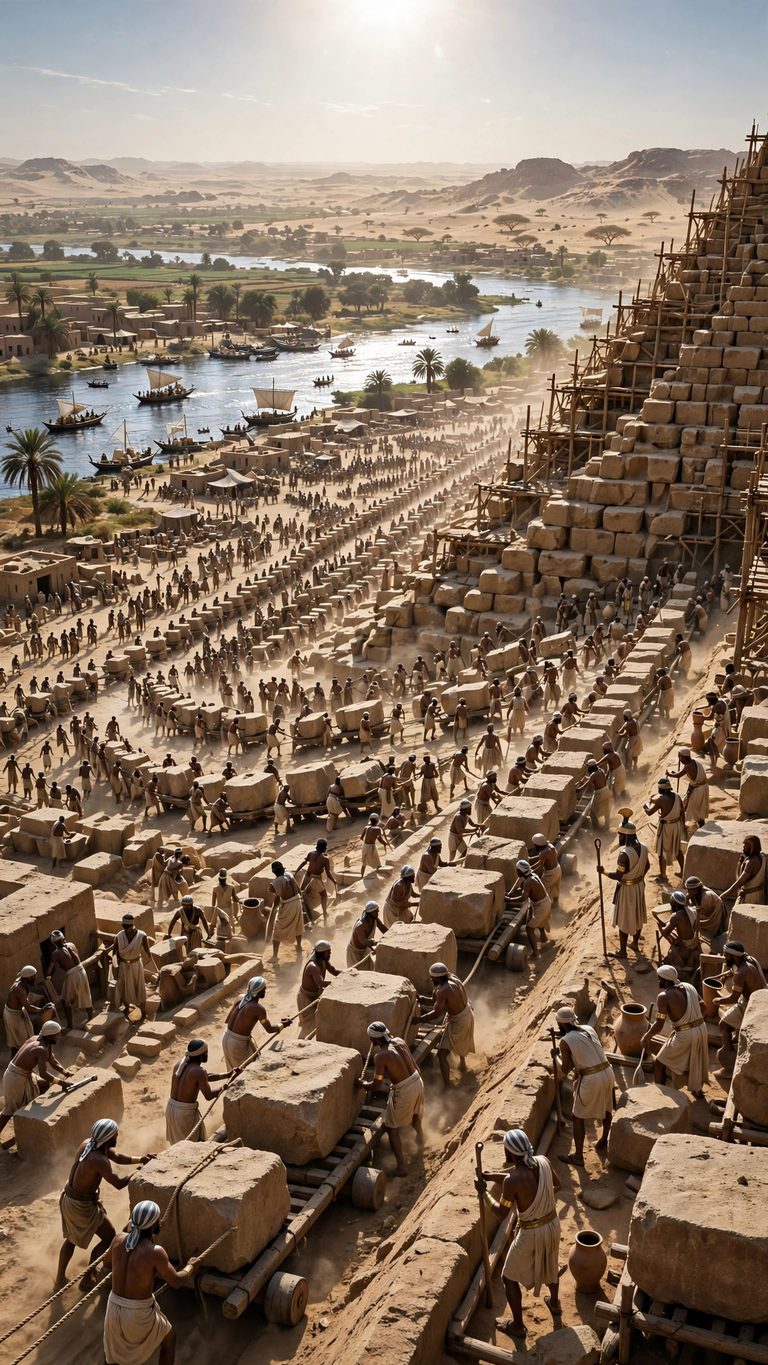
Four thousand five hundred years ago, on the baking sands of the Giza plateau, tens of thousands of workers hauled multi-ton stone blocks into the sky — without wheels, without steel, without engines. The Great Pyramid remains the most audacious construction project in human history, and the sheer scale of the effort still defies imagination. This AI video prompt resurrects that epic: ancient Egyptians building the pyramid, massive blocks being dragged on sledges, thousands of workers swarming the site, the Nile glittering in the background under a merciless desert sun. It is cinematic time travel — history content that looks like a Hollywood epic. History pages, educational creators, and documentary-style channels can use it to make the ancient world feel viscerally real. No film set in Morocco, no thousand-extras casting call. Just a prompt that rebuilds the ancient world in ten seconds.
The Prompt
Copy the exact prompt below and paste it into your favorite AI video generator. It is optimized for vertical short-form video.
Epic historical scene of ancient Egyptians building the great pyramid, massive stone blocks being hauled, thousands of workers, desert sun, Nile in background, cinematic historical epic, ultra realistic
Why This Prompt Works
Historical epic content works because it satisfies two powerful viewer motivations simultaneously: curiosity and awe. The pyramid is one of humanity’s most universally recognized wonders — nearly every viewer on earth knows what it is, which means zero exposition is needed before the spectacle begins. That instant recognition is gold for short-form video, where you have roughly one second to earn the next nine. The ‘thousands of workers’ element is doing crucial psychological work: crowds signal importance and scale, triggering the same fascination we feel watching stadium crowds or rush-hour timelapses. Human brains are drawn to collective human effort — it makes us feel connected to something larger. The hauling of massive blocks adds the irresistible physics of heavy labor; viewers can almost feel the strain, which creates embodied engagement far stronger than passive watching. The Nile in the background and the desert sun provide authentic geographical anchoring that history enthusiasts will appreciate and share within their communities. On platforms, educational content with cinematic production values is having a massive moment — ‘edutainment’ channels routinely outperform pure entertainment because viewers feel their screen time was well spent, which drives saves and follows. The vertical framing turns the pyramid’s triangular mass into a towering presence on phone screens, and the ten-second duration is perfect for a ‘did you know’ format: spectacle first, fact in the caption. History content also enjoys exceptional evergreen longevity — unlike trends, the pyramids will be fascinating forever.
How to Use This Prompt
Copy the prompt exactly, keeping ‘cinematic historical epic, ultra realistic’ — these prevent the AI from rendering a cartoonish or game-like scene. Veo 3 is the best choice for photorealistic crowds and desert environments; its handling of large-scale human activity is unmatched. Set 9:16 vertical and 10 seconds to capture the full scope of the construction site. In Runway Gen-4, a slow aerial descent from the pyramid’s apex down to the workers creates a breathtaking reveal of scale. Kling renders desert heat, dust, and crowd movement convincingly and is budget-friendly for educational series. Pika’s rich contrast enhances the golden desert palette, while Sora produces beautiful atmospheric haze over the Nile. Check crowd rendering carefully — distant AI crowds can look blobby, so favor takes where the workers read as distinct figures. In editing, this footage is begging for educational narration: ‘It took 20 years and 100,000 workers…’ A knowledgeable voiceover transforms spectacle into a lesson, and lessons get saved. Add on-screen facts at key moments: block weight (2.5 tons average), construction timeline, workforce size. Trending ‘ancient history’ audios or epic orchestral scores complete the atmosphere. Post on weekends when educational content gets leisure viewing, and pin a comment with a mind-blowing fact to spark discussion — history buffs love to debate in comments, and debate drives reach.
Pro Tips & Creative Variations
This ancient-epic template unlocks an entire history channel. Create companion prompts for the same series: the Sphinx being carved, the Nile flooding season, workers’ village life at Deir el-Medina — a consistent ‘Ancient Egypt week’ builds binge-watching behavior. Try perspective variations: a worker’s-eye view straining against the ropes (intimate, human), a pharaoh’s-eye view surveying from a palanquin (power, grandeur), or a modern tourist’s phone footage dissolving into the ancient scene (a viral transition format). For the viral ‘then vs now’ trend, generate the construction scene and crossfade to a real photo of the completed pyramid — the 4,500-year jump in one cut is irresistibly shareable. If the blocks look weightless, add ‘straining workers, ropes taut, dust rising’ to sell the physics. You can adapt the formula to other wonders: Roman aqueduct construction, the Great Wall’s mountain passes, or Angkor Wat rising from jungle — each taps a different history community. For classrooms and museums, this is gold: teachers can generate custom visuals for any lesson in minutes. Advanced creators can add a timeline scrubber graphic (‘2560 BC’) for documentary authenticity. And for maximum engagement, end captions with a debate prompt: ‘Aliens or human ingenuity? Defend your answer below.’ Watch the comments explode.
Frequently Asked Questions
Which tool is best for ancient crowd scenes? Veo 3 handles large crowds and desert environments most realistically. Kling is a strong budget alternative. Always check that distant workers look like distinct figures, not blobs.
Is AI-generated history content accurate enough for educational use? The visuals are evocative rather than documentary-precise. Pair them with well-researched narration and captions, and add a note that visuals are AI-reconstructed — transparency builds trust with history audiences.
Can I make a whole ancient Egypt series? Absolutely — generate the pyramid, Sphinx, Nile life, and pharaoh’s court with consistent golden-desert grading for a cohesive series that encourages binge-watching and follows.
How do I avoid anachronisms in the scene? Keep prompts focused on documented elements (limestone blocks, copper tools, reed boats). Avoid specifying technologies the era lacked, and fact-check your caption claims with reliable sources.
The pyramids were not built by mystery — they were built by people, rope by rope, block by block, under a sun that never relented. This prompt lets your audience feel that staggering human effort in ten cinematic seconds. Use it to teach, to awe, or to remind viewers what determined humans can build. Copy the prompt, raise your pyramid, and give the ancient world the epic it deserves.
Related Viral Prompts
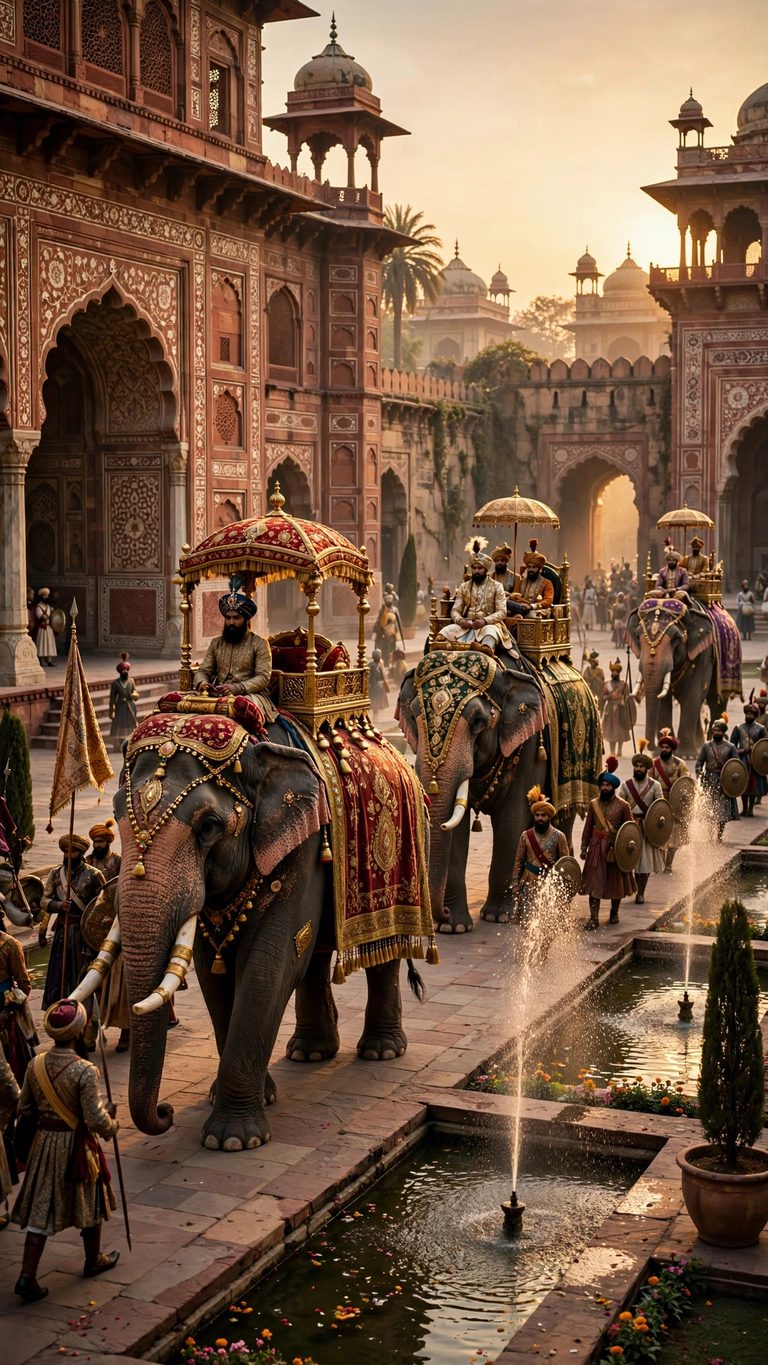
- Mughal Palace 1700s AI Video Prompt: Lavish Royal Courtyard with Elephants & Architecture in Golden Light
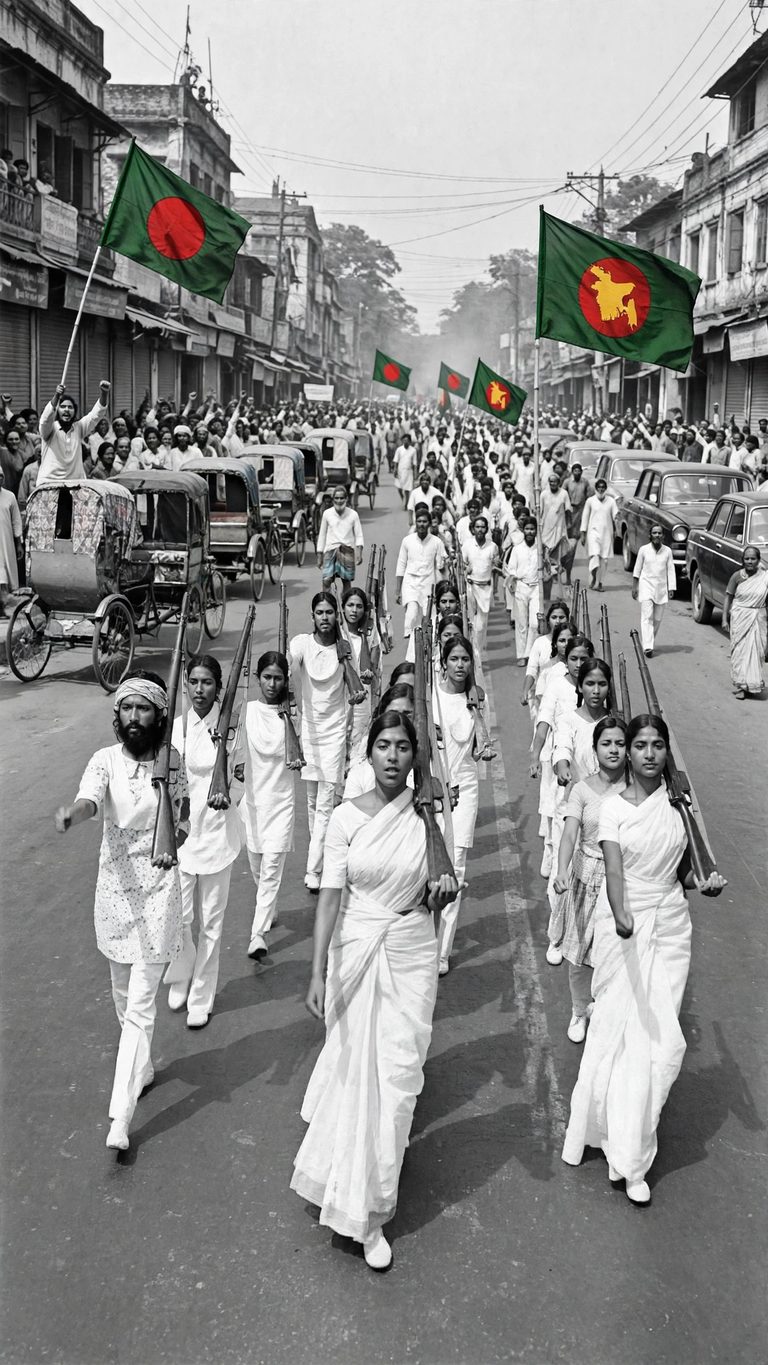
- Dhaka 1971 Liberation War AI Video Prompt: Emotional Victory Day Scene of Freedom Fighters & Celebration
- T-Rex Dinosaur Jungle AI Video Prompt: Thrilling Prehistoric Scene of Giant T-Rex in Misty Jurassic Forest
# A I V i d e o # P r o m p t B a z a r # E g y p t # H i s t o r y # P y r a m i d


Leave a Reply