
Introduction
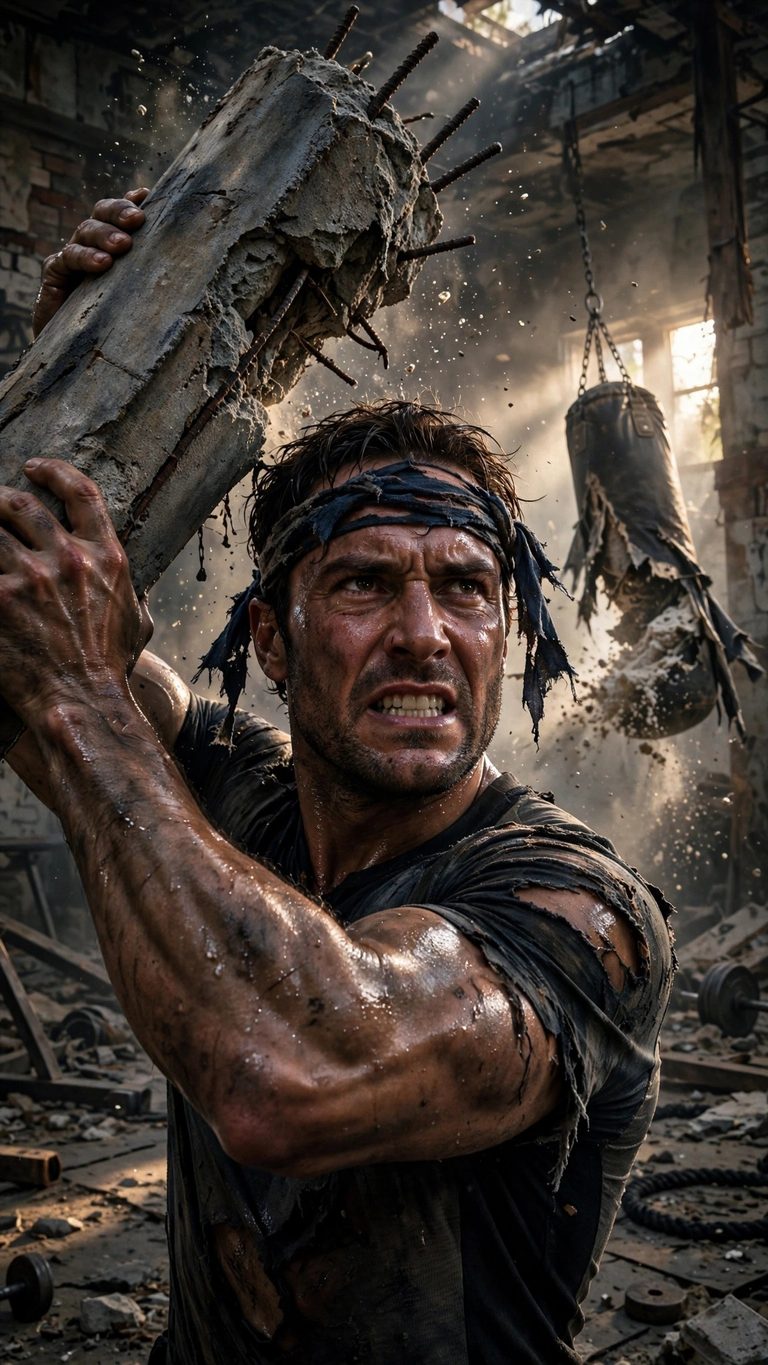
There is a reason the training montage is the most beloved sequence in every superhero story ever told. Long before the hero saves the city, they earn it in the dark — one rep, one mile, one impossible lift at a time. Think of Rocky Balboa pounding raw meat in a freezing Philadelphia gym, or a young boxer running up museum steps at dawn while the city still sleeps. This viral AI photo prompt bottles that exact feeling: a gritty superhero training at dawn inside a ruined gym, hoisting a collapsed concrete pillar while sweat flies and chalk dust drifts through shafts of morning light. It is the underdog moment, the before-the-glory moment, and audiences cannot resist it. Fitness creators, comic artists, and #Superhero fans on #PromptBazar have discovered that training scenes generate some of the most shared and saved images in the entire genre — because grit is universally understood. Nobody needs powers to recognize exhaustion, determination, and the quiet promise that hard work pays off. This article breaks down a free, copy-paste prompt that creates a cinematic, hyper-realistic hero training photograph in seconds, explains why every visual element in it works, and shows you how to adapt it across Midjourney, DALL-E 3, Flux, and Stable Diffusion for your own #Training and #Grit themed creations.
The Prompt
Copy the exact prompt below and paste it into your favorite AI image generator — no edits needed for your first result:
Gritty superhero photograph of a hero training at dawn in a ruined gym, lifting a collapsed concrete pillar, sweat flying, torn cape tied as headband, punching bag burst open behind, chalk dust in sunbeams, determined exhausted face, Rocky-style underdog grit, raw powerful realism, ultra detailed, 8k, masterpiece
Why This Prompt Works
Great prompts are built in layers, and this one stacks four distinct layers that image models respond to powerfully. The first layer is setting and light: “training at dawn in a ruined gym” plus “chalk dust in sunbeams.” Dawn light is warm, low, and directional — it carves muscle definition out of shadow in a way midday light never could. Ruined gyms add texture everywhere: cracked concrete, peeling paint, rusted equipment. AI models trained on millions of photos associate dawn gym photography with documentary realism, so the image instantly reads as a photograph, not a cartoon. The chalk dust floating in sunbeams is the secret weapon — it adds atmosphere, depth, and a sense of scale that makes the whole frame feel three-dimensional and alive.
The second layer is action with stakes. The hero is not posing; they are “lifting a collapsed concrete pillar” with “sweat flying.” Lifting a pillar — not a barbell — tells a story of improvisation and superhuman effort at once. It is an object with context: something collapsed, something wrong in the world, and the hero is literally shouldering the burden. Sweat flying freezes motion and conveys explosive exertion. Models render sweat and motion details exceptionally well because fitness photography is abundant in training data, so this grounds the fantasy in photographic credibility.
The third layer is character storytelling through costume details. A “torn cape tied as headband” is a brilliant touch — it says this hero repurposed their own symbol of power into a working tool. It communicates humility and focus without a single word of dialogue. Behind them, a “punching bag burst open behind” shows the training already happened; we arrived mid-session, and the evidence of earlier effort litters the frame. The “determined exhausted face” gives the model an emotional anchor — exhaustion plus determination is the exact expression of every iconic training photo.
The fourth layer is style and quality anchors. “Rocky-style underdog grit” invokes a specific cinematic reference the model understands deeply — grainy, blue-collar, Philadelphia-at-5am energy. “Raw powerful realism” pushes away glossy comic-book polish, while “ultra detailed, 8k, masterpiece” are proven quality tokens that sharpen textures, improve anatomy, and reduce the flat, plasticky look that plagues weaker prompts. Together, the four layers give the model a complete brief: where, what, who, and how it should feel — which is why this prompt produces stunning results on the first try for so many creators.
How to Use This Prompt
Midjourney: Paste the prompt after /imagine and add --ar 16:9 --v 6.1 --style raw for a cinematic widescreen photograph. The raw style keeps the grit intact — default Midjourney beautification can soften the very roughness that makes this image work. If the pillar looks too small, add ::2 weight to the pillar phrase or regenerate with a chaos value under 10 for consistency.
DALL-E 3 (via ChatGPT): Paste the full prompt as-is. DALL-E 3 follows natural language well, so you can add a sentence like “Keep the lighting as dawn sunbeams through broken windows” if the first result drifts. Ask for a 1792×1024 landscape size for poster-style framing.
Flux: Flux excels at photorealism — paste the prompt verbatim and use a guidance scale around 3.5. Flux renders sweat, dust, and concrete texture beautifully, making it arguably the best free option for this particular image.
Stable Diffusion (SDXL / Pony): Use the prompt as your positive prompt and add a negative prompt like “cartoon, illustration, blurry, deformed hands, extra fingers, smooth plastic skin.” Set steps to 30-40 and use a photorealistic checkpoint such as Juggernaut XL for maximum grit. A 1216×832 resolution works well for the wide gym composition. Whichever tool you use, generate three or four variations and pick the one with the best facial expression — the “determined exhausted face” is the emotional core, so prioritize it over background details when choosing your keeper.
Pro Tips & Creative Variations
Once you have a great base image, the real fun begins — this prompt is a template you can remix endlessly. Change the hour: swap “dawn” for “midnight under flickering fluorescents” for a lonelier, moodier session, or “golden hour on a rooftop” for a triumphant training vibe. Change the feat: replace the concrete pillar with “dragging a derailed train car,” “doing pull-ups on a collapsed fire escape,” or “holding a cracked dam wall” — each object tells a different story about what this hero is preparing for. Change the gym: a flooded subway tunnel, an abandoned dojo, a high-tech Fortress of Solitude training deck, or a Himalayan cliffside at sunrise all radically reshape the mood while keeping the composition.
Weather as a training partner: add “rain hammering through the broken roof” or “snow drifting through shattered windows” — training in bad weather doubles the underdog symbolism and gives you gorgeous particle effects for free. Costume variations: keep the torn-cape headband but change its color to signal different heroes — crimson for a classic, midnight blue for a stealth type, or scorched gold for a veteran. Camera language: append “shot on 35mm film, shallow depth of field” for an intimate documentary feel, or “dramatic low-angle wide shot” to make the hero tower over the viewer. Series potential: this prompt is perfect for a progression series — generate the same hero “week one, struggling” through “week twelve, unstoppable” and post it as a carousel. #Training transformation content performs exceptionally well, and the #Grit aesthetic keeps every frame cohesive. Finally, try a “sparring partner” version: add “a second hero holding the pillar steady, both straining” for a teamwork twist that doubles the emotional weight.
Frequently Asked Questions
Can I change the hero’s costume or appearance? Absolutely. Add descriptors before “hero” — for example, “a heroine in a scorched red suit” or “an aging hero with gray stubble.” The prompt’s action and atmosphere layers stay intact while the character changes. Keep costume descriptions concise so they don’t dilute the training details.
Why does my result look too clean and glossy? Some models default to polished superhero aesthetics. Strengthen the grit by adding “film grain, weathered textures, dirt and sweat, unpolished” and, in Midjourney, the --style raw parameter. In Stable Diffusion, a photorealistic checkpoint matters more than any keyword.
What aspect ratio works best? 16:9 or 3:2 landscape captures the ruined gym environment and the pillar lift in one frame. For phone wallpapers or stories, regenerate with a 9:16 portrait ratio and add “vertical composition, hero centered” so the model reframes rather than crops.
Can I use these images commercially? That depends on the image generator’s terms of service, not the prompt itself. Most paid tiers of Midjourney, DALL-E, and Flux grant commercial rights to images you generate, but always check the current license for the specific tool you use, especially for merchandise or advertising.
Every legend has a first rep. Paste this prompt, generate your dawn training shot, and share it with the #Superhero community — your hero’s journey starts with a single image. Try it now and tag your creation so fellow #PromptBazar creators can cheer you on.
Related Viral Prompts
- Villain Lair Infiltration: Free Viral AI Photo Prompt for Cinematic Stealthy Superhero Spy Thriller Art
- Superhero Team Pose Amidst a Lightning Storm: Free Viral AI Photo Prompt for Epic Cinematic Squad Poster Art
- Hero Carrying a Passenger Plane Above Clouds: Free Viral AI Photo Prompt for Epic Superhero Strength Feat Art
# A I P h o t o # P r o m p t B a z a r # S u p e r h e r o # T r a i n i n g # G r i t

Leave a Reply