
Introduction
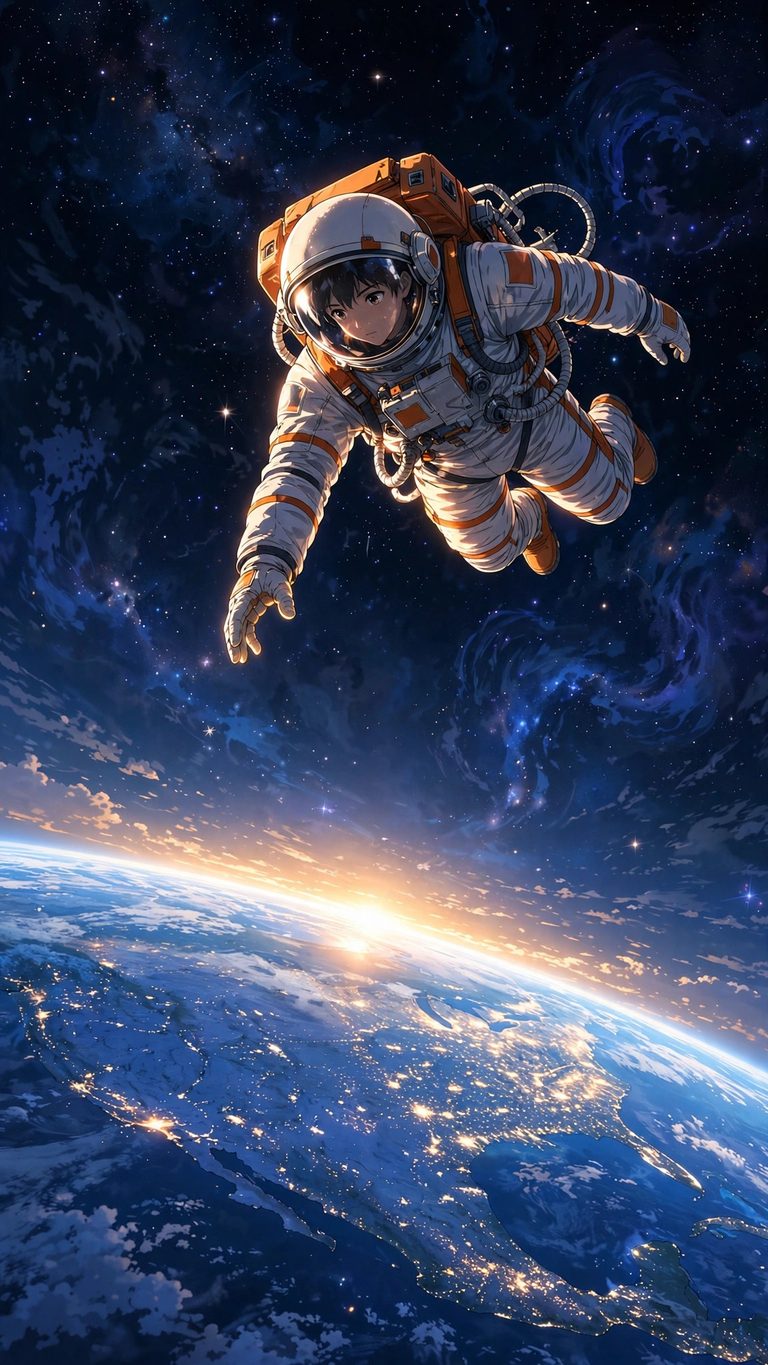
There is a specific human emotion that only space can produce: the overwhelming wonder of seeing Earth from above, fragile and glowing in infinite dark. Astronauts call it the overview effect, and it changes people permanently. This AI video prompt recreates that feeling in anime form: a lone astronaut in a white and orange suit floating above a magnificent blue Earth, reaching toward the sunrise line. Space content has a unique viral advantage: it inspires genuine awe, and awe is the emotion most likely to make someone tag a friend. The anime treatment makes the cosmic intimate, which is why space anime clips travel far beyond the usual sci-fi audience. This article gives you the exact prompt, the psychology of cosmic awe, rendering steps for Veo 3, Runway, Kling, Pika, and Sora, and variations that turn one spacewalk into an odyssey.
The Prompt
Copy the prompt below exactly into your AI video generator and render vertical 9:16 for ten seconds:
Awe-inspiring anime scene of a lone astronaut in a white and orange suit floating above Earth, the planet glowing blue and magnificent below, stars glittering in infinite darkness, the astronaut reaching out toward the sunrise line, slow majestic drift, profound sense of wonder, ultra detailed space anime style
Why This Prompt Works
Awe is a full-body experience, and this prompt engineers it carefully. The lone astronaut provides the human anchor; without a person in frame, space is just scenery, but with one small figure, the viewer feels the scale in their bones. The white and orange suit is a deliberate readability choice: warm orange against the blue Earth and black space creates maximum contrast, so the astronaut reads instantly even on a small phone screen. Earth glowing blue and magnificent below triggers the overview effect by proxy; studies show even images of Earth from space produce measurable awe and prosocial feelings. The astronaut reaching toward the sunrise line is the narrative gesture: reaching is humanity’s oldest symbol of aspiration, and the sunrise line, where night becomes day on the planet’s edge, is the most beautiful boundary in existence. Slow majestic drift is the correct motion language; space feels vast because things move slowly in it, and the model will honor that pacing. Stars glittering in infinite darkness provide the depth field that makes the scene feel truly three-dimensional rather than flat.
How to Use This Prompt
Space scenes demand patience from both the model and the editor. Step one: in Veo 3, paste the prompt, set 9:16 vertical, ten seconds, and low-medium motion; space drift should feel weightless, not hurried. In Runway, a very slow push-in toward the astronaut enhances the floating sensation. In Kling, use gentle motion mode. In Pika, keep motion strength low and generate two takes, checking that the Earth’s curvature stays stable and the stars do not swim. In Sora, render as-is at ten seconds. Step two: verify the astronaut’s suit details remain consistent; white suits show artifacts clearly, so pick the cleanest take. Step three: audio should be vast. Deep ambient pads, slow orchestral swells, or the trending “space awe” sounds work; consider starting in near-silence and letting the music bloom as the sunrise line approaches, because dynamic range makes vastness feel vaster. A single whispered line of text, like “so small, so beautiful,” can elevate the clip enormously. Step four: resist the urge to cut fast; let the ten seconds breathe, because awe needs time.
Pro Tips & Creative Variations
One spacewalk is a video; a mission is a saga. Continue the journey: “the astronaut drifting toward a massive rotating space station, lights blazing,” “the astronaut watching a sunrise over Earth’s clouds, colors exploding,” or “two astronauts reaching toward each other across the void, fingertips almost touching” are episodes with escalating emotion. Try the perspective flip: “view from the astronaut’s helmet visor, Earth’s reflection curved in the glass” is intimate and stunning. For the ultimate awe, generate “the astronaut looking back to see Earth eclipsing the sun, a ring of fire around the planet”; eclipse imagery is among the most saved space visuals. Vary the suit for series identity: keep the white and orange consistent so viewers recognize your astronaut instantly. Pair space clips with real space facts in captions: “Astronauts really do cry in space, the tears just float.” Educational captions on awe content get bookmarked at high rates. Time posts with real space events, launches, eclipses, meteor showers; the algorithm boosts space content when the world is already looking up.
To maximize the awe your astronaut generates, pair the video with a real space fact in the caption. Lines like ‘Astronauts can see sixteen sunrises every day’ or ‘From orbit, Earth’s atmosphere is thinner than an apple’s skin’ give viewers something to carry away and repeat, and educational awe content gets bookmarked at exceptional rates. Time your posts with real space events: rocket launches, eclipses, meteor showers, and space station flyovers. During these windows, the entire internet is already looking up, and platform algorithms boost space content to meet the demand. For the series, keep the white and orange suit identical in every prompt; visual consistency of the astronaut is what transforms separate clips into a saga viewers follow. The most powerful episode you can generate is the eclipse: your astronaut watching Earth’s shadow sweep across the planet with a ring of fire around the limb. Eclipse imagery is among the most saved visuals in existence. End your space videos with a moment of stillness, the astronaut motionless as stars drift; awe needs silence to land, and the pause before the loop restarts is where viewers decide to follow.
Frequently Asked Questions
Why does space content get so many shares?
Awe triggers the urge to share the experience; psychologists call it the need to socially share emotions. Tagging a friend under a space video is a way of saying “feel this with me,” which is the purest share motivation.
My stars look like noise. How do I improve them?
“Stars glittering” usually renders well, but if they shimmer distractingly, try adding “sharp distinct stars” or reduce motion. In post, a slight sharpening pass helps star fields read cleanly.
Can I combine this with lo-fi music?
Yes, space lo-fi is a thriving micro-genre. Slow ambient beats under the drift create the “studying in orbit” vibe that students save by the thousand.
How do I make a series from one astronaut?
Keep the suit description identical (“white and orange suit”) across all prompts and vary only the scenario. Visual consistency of the character is what turns clips into a saga.
Above the Earth, below the stars, one small figure reaches for the light. Give the internet its overview effect.
Related Viral Prompts
- Ninja on Moonlit Rooftops: Free Viral AI Video Prompt for Stealthy Night Anime Action Scenes Full of Tension
- Anime Witch Flight Photo: Free Viral AI Photo Prompt for Stunning Ghibli-Style Witch Illustrations at Dusk
- Mecha Robot Desert Sunset: Free Viral AI Photo Prompt for Epic Anime Robot Key Visuals That Dominate Feeds
# A I V i d e o # P r o m p t B a z a r # A n i m e # S p a c e # A s t r o n a u t

Leave a Reply