
Introduction
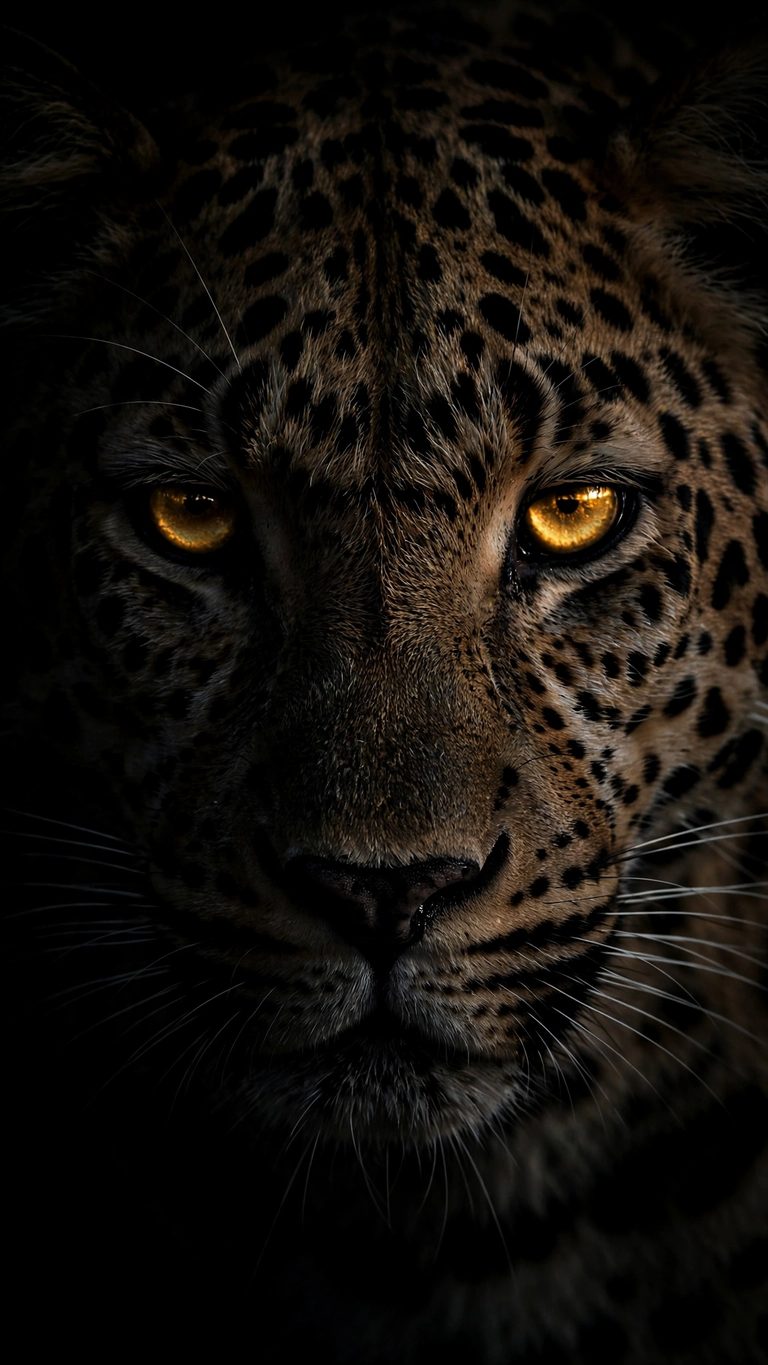
Two amber lanterns in absolute darkness. A leopard’s face emerging from black shadow, eyes blazing with reflected light, spotted coat dissolving into the night — this is wildlife photography at its most haunting and minimal. This AI photo prompt creates a night portrait of pure predator intensity: no savanna, no sunset, just the gaze. Minimalist predator imagery has a cult following because it strips nature to its essence — hunter and hunted, light and dark, you and those eyes. As a phone wallpaper, it is unmatched: the black background melts into the screen, leaving only the burning stare. As social content, it stops thumbs with primal electricity. Eight words could summarize it: beautiful, terrifying, unforgettable, and utterly shareable.
The Prompt
Copy the exact prompt below and paste it into your favorite AI image generator:
Piercing night photograph of a leopard's face emerging from darkness, glowing amber eyes reflecting camera light, spotted coat barely visible in shadow, intense predator gaze, black background, minimal and haunting, ultra detailed, 8k, photorealistic, night wildlife photography
Why This Prompt Works
Minimalism is this prompt’s superpower. By reducing the image to eyes, faint spots, and blackness, it eliminates every element where AI generation typically fails — no complex backgrounds, no full-body anatomy, no tricky paws. What remains is the one thing models render beautifully: a symmetrical, front-facing predator face with glowing eyes. This constraint-driven approach consistently produces cleaner, more striking results than busier compositions. The glowing amber eyes reflecting camera light taps into the real phenomenon of eyeshine — the tapetum lucidum reflection that makes nocturnal predators’ eyes blaze in headlights and camera flashes. Viewers recognize it instinctively from real night photography, which lends the AI image instant credibility. The intense predator gaze works on ancient neural wiring: direct stare from a predator triggers alertness and fascination simultaneously, a combination that holds attention far longer than passive beauty. The spotted coat barely visible in shadow is a brilliant tease — just enough pattern to identify the species, with the imagination filling in the rest. What the mind completes itself feels more personal and memorable than what is fully shown. Black background serves the phone-screen reality: on OLED displays, true black disappears, making the eyes appear to float on the device itself — an almost holographic effect that screenshots cannot convey but owners love. Describing the mood as minimal and haunting rather than just dark gives the render its artistic ambition: this is not an underexposed mistake, it is chiaroscuro, Rembrandt with fangs. And night wildlife photography as the genre tag tells the model to embrace high contrast, deep blacks, and selective sharpness — the exact grammar of award-winning nocturnal portraits.
How to Use This Prompt
Copy the prompt into Midjourney, DALL-E 3, Flux, or Stable Diffusion at 9:16 portrait. In Midjourney, –ar 9:16 –style raw keeps the blacks honest and deep; add –q 2 if available for maximum eye detail. Generate five or six variations — the eyes are everything, and small differences in glow intensity, symmetry, and gaze direction separate the good from the unforgettable. The winning image has perfectly symmetrical glowing eyes, a centered, confrontational gaze, and spots that fade naturally into shadow without harsh edges. Reject any with visible background elements creeping in; the black must be absolute. In post, deepen the blacks slightly and add the faintest vignette to ensure the edges melt away completely. Boost eye glow very slightly if needed, but restraint is key — overdone glow looks digital. This image needs no caption to work, but a two-word caption like night hunter amplifies the mystique. It excels as a wallpaper, a story background with text overlaid in the black space (designers love the negative space), and as the striking cover of a nocturnal wildlife carousel. Post it in the evening for thematic resonance — night content at night feels intentional and immersive.
Pro Tips & Creative Variations
The glowing-eyes formula is endlessly adaptable. Try a lion, tiger, or wolf with the same treatment for a predator series — a glowing-eyes collection makes a stunning grid post. For color play, describe the eyes as green or icy blue instead of amber; unexpected eye colors create surreal, shareable variants. A half-face version, one eye blazing at the frame’s edge, is even more minimal and arguably more haunting. Experiment with faint rain or mist catching light around the face for added atmosphere without breaking the minimalism. For a diptych, pair the leopard’s night gaze with the same leopard in daylight from the day portrait prompt — the transformation from beauty to beast in one post is a powerful narrative. In editing, try a subtle duotone: the faintest warm tint in the highlights against cool blacks for a cinematic grade. These images make exceptional merchandise — the stark design translates perfectly to t-shirts, posters, and phone cases. For engagement, post it with no context at all, just the image; mysterious minimalism invites comments asking what it is, and every comment boosts reach. Or run a poll: which predator’s eyes are most haunting — the debate will run itself.
Frequently Asked Questions
How do I keep the background truly black? The prompt’s black background plus minimal usually suffices, but if gray haze appears, deepen blacks in any photo editor. Also avoid adding any environment words — every extra noun is an invitation for the model to render something.
Why do the eyes sometimes look cross-eyed or mismatched? Eye symmetry at high glow is challenging. Generate more variations and inspect at full zoom. Front-facing, centered compositions like this one have the highest symmetry success rate — which is exactly why the prompt is composed this way.
Can this work for non-predator animals? The formula works for any animal with striking eyes — owls are phenomenal, as are bush babies and big cats generally. Prey animals lose the menace that makes this specific image electric, though.
What is the best use case for this image? Phone wallpaper is number one — true-black images with glowing focal points are wallpaper royalty. Close second: story backgrounds with text, where the black negative space is a designer’s dream.
In conclusion, the leopard night gaze is darkness distilled to two points of fire. Minimal composition, maximal intensity, and a stare that follows you off the screen. Generate it with discipline, demand perfect symmetry, embrace the black — and let the most haunting eyes in the wild do the talking.
Related Viral Prompts
- Rhino Mud Bath: Characterful AI Photo Prompt for a Rugged African Wildlife Portrait (DALL-E 3 & Midjourney Ready)
- Cheetah Portrait Speed: Stunning AI Photo Prompt for the World’s Fastest Land Animal (Midjourney & Flux Ready)
- Giraffe Calf Tender Moment: Heart-Melting AI Photo Prompt for a Baby Giraffe Nuzzle (Midjourney & DALL-E 3 Ready)
# A I P h o t o # P r o m p t B a z a r # L e o p a r d # N i g h t # E y e s

Leave a Reply