
Introduction
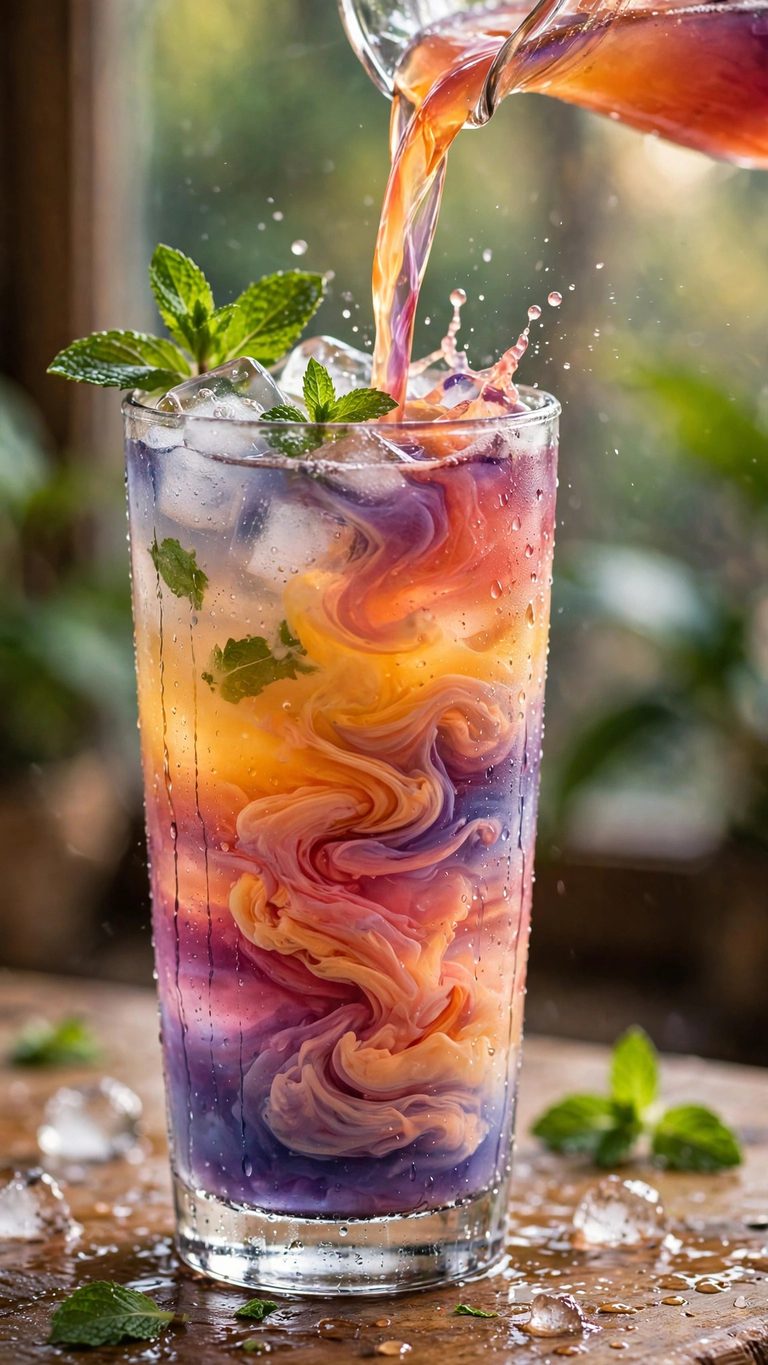
A tall glass. A pour begins — and colors bloom and swirl like a sunset caught in glass: amber, rose, gold, folding into each other in slow motion. Ice cubes clink, mint settles on top, condensation beads the glass. This AI video prompt is refreshment made visible, and it is one of the most hypnotic drink formats on the internet.
Layered drink pours occupy a unique intersection: part beverage, part abstract art, part science experiment. Watching densities separate and swirl triggers the same fascination as lava lamps and marbling — it is physics as entertainment. The “sunset in a glass” framing gives viewers an instant metaphor that makes the video describable, and describable videos get recommended (“you have to see the sunset drink”). For cafes, beverage brands, bartenders, and summer content creators, this prompt pours ten seconds of pure, shareable refreshment.
The Prompt
Copy the exact prompt below and paste it into your favorite AI video generator:
Beautiful slow motion of a vibrant layered mocktail being poured into a tall glass, colors swirling like a sunset, ice cubes clinking, mint garnish, condensation droplets, ultra realistic, refreshing
Why This Prompt Works
This prompt works through color kinetics — the deep pleasure of watching colors move and mix. Humans are unusually responsive to flowing color; it is why we stare at sunsets, auroras, and ink in water. The layered pour creates a controlled version of that phenomenon inside a glass, and slow motion stretches it into something to savor. The prompt’s “colors swirling like a sunset” is doing precise psychological work: sunsets are among the most universally loved visuals in existence, so the metaphor pre-loads the video with positive affect.
The condensation droplets are a subtle masterstroke. Condensation is the universal visual shorthand for “ice cold” — advertisers have used beaded glasses for a century because the brain reads droplets as refreshment before any other processing happens. Combined with the clinking ice (an auditory freshness cue for sound-on viewers), the video attacks thirst on every sensory channel available to a screen.
Finally, the format is aspirationally achievable. Unlike a chocolate fountain or a skyscraper, a layered mocktail looks like something the viewer could actually make. That achievability drives saves (“must try this”) and recreations, and recreation content — viewers filming their own versions — is the holy grail of viral mechanics because it multiplies your reach through other people’s posts.
The mocktail pour also exploits a quirk of color psychology: we drink with our eyes first, and layered colors signal complexity and craft before a single sip. Beverage researchers have found that multi-colored drinks are perceived as more flavorful and premium than monochrome ones, even when the taste is identical. The slow-motion swirl amplifies this by extending the moment of chromatic promise — viewers spend eight seconds anticipating a flavor they will never taste, and the anticipation itself is pleasurable. It is the visual equivalent of a perfume ad: selling the idea of the experience so completely that the idea becomes the product.
How to Use This Prompt
Copy the prompt exactly — “colors swirling like a sunset” and “condensation droplets” are the visual anchors. For liquid pours and glass, Veo 3 and Kling render fluid dynamics most convincingly; Runway Gen-4 offers precise control over the swirl pacing. Set 9:16 vertical, 8 seconds of slow motion.
Generate three to four takes and study the pour physics: winning liquid flows with weight, layers stay distinct before swirling, and ice cubes bob naturally. AI sometimes makes liquid look thin or cubes float wrong — discard those. The condensation should bead realistically on the glass exterior. A slight camera drift following the rising liquid level adds elegance. For audio, drink content loves crisp, clean sounds — the pour glug, ice clinks — or breezy trending tracks. Caption with the recipe tease (“Sunset cooler — recipe in comments”) to convert viewers into followers. Post on hot afternoons or Friday evenings, when refreshment is top of mind.
Pro Tips & Creative Variations
First, color-swap the sunset: ocean blues, tropical greens, berry purples — each palette is a new video with the same mechanics. Second, glass-swap: mason jars, copper mugs, coconut shells. Vessel changes refresh the format cheaply.
Third, add the garnish ceremony: the mint placement, the citrus wheel, the sugared rim — finishing touches give viewers a second payoff after the pour. Fourth, go educational: overlay text with the actual layer recipe timed to the pour. Recipe content gets saved at extraordinary rates.
Fifth, seasonalize: holiday mocktails, summer coolers, monsoon masalas. Finally, monetize the refreshment: cafes, juice brands, and beverage companies need exactly this content. A watermarked portfolio of AI pours, pitched with “your drink, like this,” turns thirst into contracts.
Drink content is menu content, so sell it to menus. Cafes and juice bars constantly need fresh visuals for seasonal drinks, yet most rely on phone photos. A slow-motion layered pour is a different league — offer “drinks in motion” packages and watch cafe owners say yes. Summer is the obvious peak season, but do not sleep on the other three: autumn spice layers, winter citrus sunsets, spring florals each have dedicated audiences. Bartender collaborations are a growth goldmine — feature a real bartender’s signature mocktail animated, tag them, and tap their following while giving them portfolio content. For direct audience building, the recipe-reveal format converts best: post the pour with “recipe in comments,” then drop the layering ratios. Educational drink content gets saved at extraordinary rates because viewers genuinely intend to recreate it. Beverage brands are the premium lane: a new juice or syrup line launched with cascade footage looks like a million-dollar campaign. Finally, the mocktail movement itself is a tailwind — sober-curious audiences are growing fast, and they are hungry for content that celebrates not drinking beautifully.
Frequently Asked Questions
Which AI tool renders liquid pours best?
Veo 3 and Kling lead on fluid dynamics and glass rendering. The key filters are pour weight, distinct layers, and natural ice behavior.
How do I keep the layers from mixing into mud?
The prompt’s ‘layered’ and ‘swirling’ balance is deliberate — distinct layers that swirl at the edges. If output turns muddy, regenerate; clean layer separation is the quality bar.
Should I include a real recipe?
Yes — teasing the recipe in the caption (‘recipe in comments’) is one of the highest-converting CTAs in drink content. It turns viewers into followers.
What is the best posting time?
Hot afternoons for refreshment cravings, Friday evenings for weekend entertaining vibes. Heat and leisure are this format’s two best friends.
The layered mocktail pour is a sunset you can drink — eight seconds of swirling color that sells refreshment on every channel. Copy the prompt, pick your palette, and pour it when the day is hottest. Thirst, as always, does the marketing.
Related Viral Prompts
- Golden Hour Breakfast: Maple Syrup Pancake Pour AI Video Prompt for Cozy Viral Morning Food Reels
- Blade Master: Sushi Chef Knife Skills AI Video Prompt for Mesmerizing Viral Culinary Craft Videos
- The Perfect Cheese Pull: Macro Pizza Slice AI Video Prompt for Mouth-Watering Viral Food Commercial Reels
# A I V i d e o # P r o m p t B a z a r # M o c k t a i l # D r i n k s # R e f r e s h i n g

Leave a Reply